Essential Hand Tools
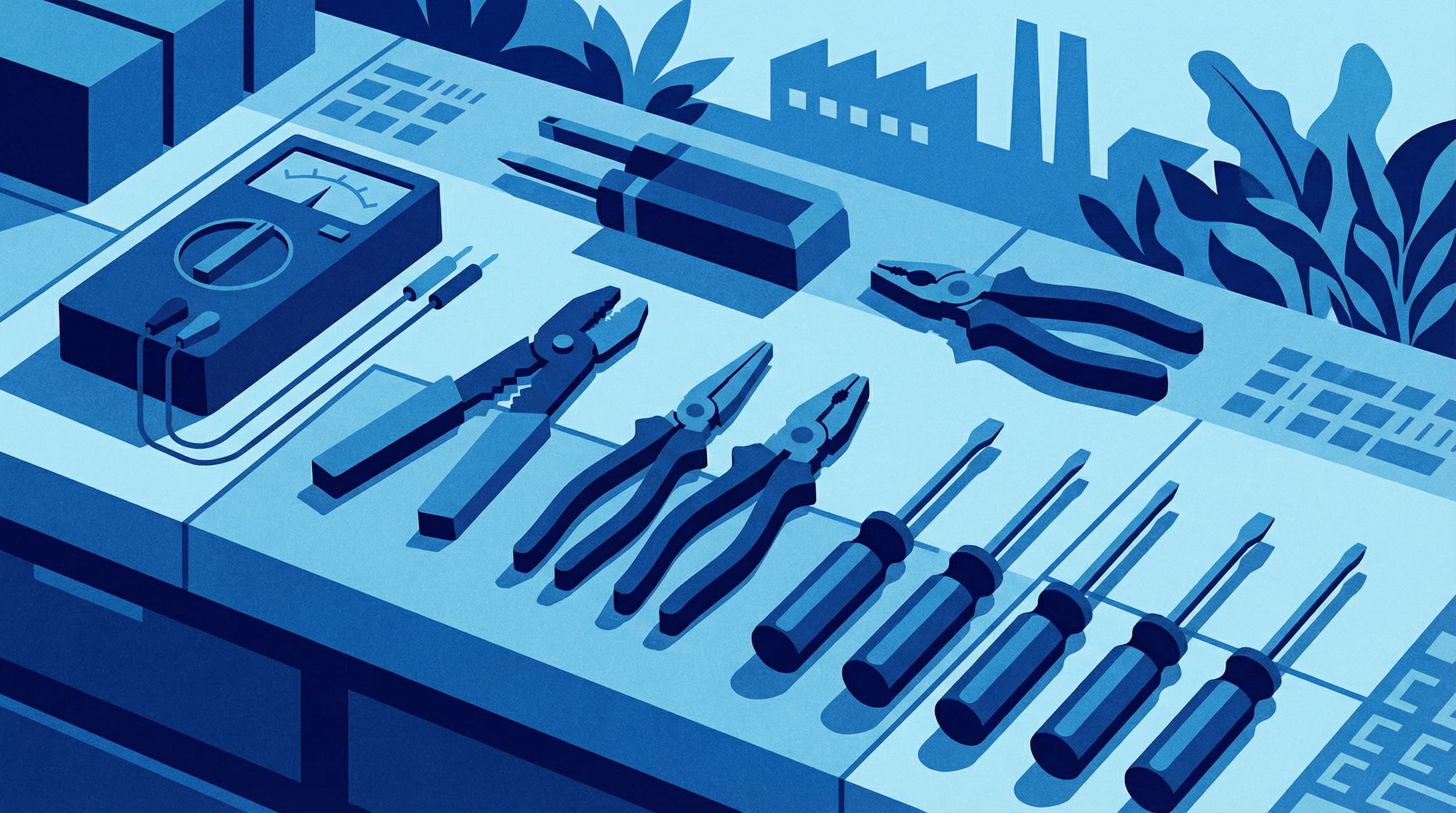
Hand tools are the backbone of an electrician's kit — the tools you reach for dozens of times every day. Investing in quality hand tools from the start saves money in the long run, as cheap tools break, wear out, and frustrate. For most hand tools, you'll keep them for 10-20 years if you buy well.
The core hand tool kit for a UK electrician includes:
- VDE insulated screwdrivers — A set of slotted and Phillips/Pozi-drive screwdrivers rated to 1,000V. The Wera Kraftform or Wiha range are industry favourites. Budget £30-£60 for a quality set
- Side cutters (diagonal cutting pliers) — For cutting cable, cable ties, and conductors. Knipex are the gold standard. £20-£35
- Combination pliers — For gripping, bending, and cutting. Again, Knipex or CK are top choices. £15-£30
- Long-nose pliers — Essential for working in tight spaces, bending conductor ends, and handling small components. £15-£25
- Wire strippers — Automatic wire strippers (like the Knipex 12 62 180 or Jokari range) dramatically speed up cable preparation. £20-£40
- Cable cutters — For cleanly cutting larger cables. A ratchet-type cutter handles up to 25mm² with minimal effort. £25-£50
- Tape measure — 5m or 8m is standard. Stanley FatMax is the trades favourite. £10-£20
- Voltage indicator (voltage tester pen) — A two-pole voltage tester like the Fluke T150 or Martindale VT28. Essential for confirming circuits are dead before working. £60-£150
- Spirit level — A small torpedo level for aligning back boxes, and a longer 600mm level for trunking runs. £10-£30
- Knife and utility knife — An electrician's knife (like the CK karambit-style) for stripping sheathing, plus a retractable utility knife. £10-£25
Budget approximately £250 to £500 for a complete hand tool set from quality brands. CK, Knipex, Wera, Wiha, and Klein are the most respected brands among UK electricians. Avoid the temptation to buy cheap tool sets from discount retailers — they'll let you down on site and need replacing within months.
A good-quality tool belt or pouch is also essential — it keeps your most-used tools at hand and saves constant trips to the tool bag. The CK Magma range and Makita belt systems are popular choices among UK sparks. Budget £30-£80 for a decent setup.
Power Tools
Power tools transform your productivity on site. The shift to cordless/battery-powered tools over the past decade means you're no longer hunting for power sockets or trailing extension leads around job sites. Most electricians now run a single battery platform — all tools sharing the same battery type.
Essential power tools for an electrician:
- Cordless combi drill — Your most-used power tool. Handles drilling into wood, metal, and light masonry, plus driving screws. An 18V model with brushless motor is the standard. £80-£200
- Cordless SDS drill — Essential for drilling into brick, concrete, and block. You need this for running cables through masonry walls, mounting back boxes, and fixing containment. A compact 18V SDS-Plus model is sufficient for most electrical work. £150-£300
- Cordless impact driver — For driving screws quickly and with more torque than a standard drill. Particularly useful for fixing cable trays, trunking, and heavy accessories. £80-£180
- Cordless reciprocating saw — For cutting notches in joists, trimming conduit, and general demolition during first fix. £80-£150
- Cordless multi-tool (oscillating) — Invaluable for cutting back boxes into plasterboard, trimming door frames for trunking, and detailed cutting work. £80-£150
- Jigsaw — For cutting holes in boards for consumer units, distribution boards, and larger cutouts. £60-£120
The big four battery platforms among UK electricians are Makita (LXT 18V), DeWalt (XR 18V), Milwaukee (M18), and Bosch Professional (18V). All four are excellent; the best choice is whichever your local supplier stocks and services well. Buying into one platform and accumulating batteries is much more cost-effective than mixing platforms.
Budget £500 to £1,200 for a core set of power tools with batteries and charger. Look out for multi-tool combo kits that include several tools, batteries, and a case at a significant discount versus buying individually. A 3-piece kit (combi drill + impact driver + SDS) with two batteries is a common starting point at £300-£500.
Test Equipment
Test equipment is non-negotiable for any professional electrician. UK wiring regulations (BS 7671) and the competent person schemes all require that installations are properly tested and certified. The right test instruments also keep you and your customers safe.
Essential test equipment:
- Multifunction tester (MFT) — The most important and expensive piece of test equipment. Performs insulation resistance, continuity, loop impedance, RCD testing, and earth fault loop tests — all the measurements required for EICR and installation certificates. Top brands: Megger (MFT1741/MFT1845), Metrel, Kewtech (KT66DL), Fluke (1664FC). Budget £500 to £1,500 for a professional-grade unit
- Voltage indicator/proving unit — A two-pole tester (Fluke T150, Martindale VT28, or Kewtech KT1780) plus a proving unit to verify the tester is working correctly. This combination is your primary safe isolation tool. Budget £80 to £200 for both
- Socket tester — A plug-in device that checks socket polarity, earth presence, and — in more advanced versions — loop impedance and RCD function. Useful for quick initial checks. Martindale and Kewtech make popular models. £15 to £80
- Digital multimeter — For general electrical measurements: voltage, current, resistance, and continuity. A CAT III or CAT IV rated meter from Fluke, Megger, or Kewtech is essential. £50 to £200
- Insulation resistance tester — While your MFT covers this function, a standalone insulation tester is useful for quick checks and as a backup. £100 to £300
- Non-contact voltage detector — A pen-style device that detects the presence of voltage without contact. Useful for initial checks, but never rely on it as your sole means of confirming a circuit is dead — always use a two-pole tester. £15 to £50
All test instruments must be calibrated regularly — at least every 12 months for instruments used for certification. Calibration costs £50 to £100 per instrument and is required by the competent person schemes. Many suppliers offer calibration services, and some (like Megger) provide a calibration-included option when purchasing. Keep your calibration certificates — you'll need them if your work is ever queried.
Budget £800 to £2,500 for a complete set of test equipment. Your multifunction tester is the largest single investment. Buy the best you can afford — a reliable MFT that gives consistent, accurate readings is worth every penny. Second-hand test instruments can be a good option if they've been recently calibrated, but check the calibration date and condition carefully.
Safety Equipment
Electrical work carries inherent risks, and proper safety equipment isn't optional — it's a professional and often legal requirement. Health and Safety Executive (HSE) regulations require employers and self-employed workers to provide and use appropriate PPE.
Essential safety equipment for electricians:
- Safety boots/shoes — Steel-toe or composite-toe with anti-penetration soles. Essential on every job site. Brands like Scruffs, DeWalt, Timberland Pro, and Helly Hansen offer comfortable, durable options. £50 to £120
- Safety glasses — Clear for indoor work, tinted for outdoor. Protect against debris when drilling, cutting, or chasing. £5 to £20 per pair
- Insulated gloves — Class 0 or Class 00 insulated gloves rated to 1,000V AC for working near live equipment. Essential for safe isolation procedures and working in consumer units. £30 to £80
- Ear protection — Disposable or reusable ear plugs, or ear defenders for prolonged power tool use. Hearing damage from SDS drills is cumulative and irreversible. £5 to £30
- Dust mask/respirator — FFP2 or FFP3 disposable masks for drilling, chasing, and any work in dusty environments. A reusable half-face respirator (like the 3M 7500 series) is more comfortable and cost-effective for regular use. £5 to £30
- Hi-visibility vest/jacket — Required on commercial sites and anywhere near traffic. £5 to £20
- Knee pads — You'll spend a lot of time kneeling at sockets, consumer units, and floor-level work. Quality knee pads (like ProKnee or Redbacks) prevent long-term knee damage. £15 to £50
- First aid kit — A basic first aid kit in your van, including burns dressings (particularly important for electrical work). £10 to £30
- Lockout/tagout kit — Padlocks and tags for isolating circuits you're working on, preventing other people from re-energising them. Essential on commercial sites and good practice on domestic jobs. £20 to £50
Budget approximately £200 to £400 for a full set of safety equipment. Replace items as they wear out — safety boots typically last 12-18 months of daily use, gloves should be inspected before each use and replaced if damaged, and filters on respirators need regular changing. Safety equipment is a tax-deductible business expense, so there's no excuse for skimping on it.
Specialist Tools
Beyond the core kit, there are specialist tools that many electricians find invaluable for specific types of work. You don't need all of these from day one — build your specialist tool collection as your work demands it.
- Cable detector/pipe locator — Detects cables and pipes hidden in walls before you drill. The C.A.T (Cable Avoidance Tool) is the professional standard for commercial work; for domestic work, a Bosch D-Tect or similar wall scanner is more practical. £50 to £800 depending on sophistication
- Thermal imaging camera — Identifies hot spots in consumer units, loose connections, and overloaded circuits. Also useful for showing customers issues with their electrical installations. FLIR and Hikmicro make models from £200 to £2,000. Some smartphone-attachable models (like the FLIR ONE) offer basic capability for around £250
- Cable pulling equipment — Draw wire, fish tape, cable rods, and lubricant for pulling cables through conduit and cavities. A basic set costs £30 to £100
- Crimping tools — For crimping lugs onto larger cables. A hydraulic crimping tool is needed for cables above 25mm². £30 to £200
- Channel/chasing machine — For cutting neat channels in masonry for recessing cables and back boxes. Much faster and cleaner than SDS drilling. £100 to £400 (or hire for specific jobs)
- Conduit bender — For bending metal and PVC conduit to precise angles. Essential if you do a lot of surface conduit work. £30 to £100
- Labels and marking — A label printer (Brother P-Touch or similar) for circuit labelling, cable identification, and professional-looking consumer unit schedules. £30 to £80
As you specialise, you may also need tools specific to your niche: EV charger installation tools, solar PV testing equipment, fire alarm installation tools, or data/networking equipment. These can add £500 to £2,000+ to your kit depending on the specialism. Many of these tools can be hired initially until you're sure the specialism is worth the investment.
Recommended Brands
Choosing the right brands for your tools is a personal decision, but there are clear leaders in each category based on quality, durability, and the consensus of UK electricians. Here's a brand guide based on extensive industry feedback:
Hand tools:
- Knipex — The undisputed leader for pliers, cutters, and gripping tools. German-engineered, virtually indestructible. Worth every penny of the premium price
- Wera — Exceptional screwdrivers and hex key sets. Their Kraftform handles are ergonomically excellent for all-day use
- Wiha — Another premium German manufacturer. Their VDE insulated range is particularly highly regarded
- CK — A British brand with a strong range of electrician-specific tools. Their Magma tool bags and pouches are industry favourites. Good value for money
- Klein Tools — American brand increasingly popular in the UK. Excellent quality, particularly their linesman pliers and cable strippers
Power tools:
- Makita — The most popular choice among UK electricians. Reliable, wide range, excellent battery platform. The DHP486 combi drill and DHR171 compact SDS are electrician staples
- DeWalt — Close second to Makita. Slightly more power-oriented, popular with those doing heavier work. The XR range is excellent
- Milwaukee — Premium positioning with innovative features. Their M12 compact range is increasingly popular for electricians who want lighter, smaller tools
- Bosch Professional — Solid, reliable tools with good ergonomics. Slightly less aftermarket support than Makita/DeWalt in the UK but excellent quality
Test equipment:
- Megger — The industry standard for multifunction testers in the UK. The MFT1845 is widely regarded as the best MFT available. Premium pricing but exceptional reliability and accuracy
- Kewtech — Excellent value for money, particularly the KT66DL multifunction tester. Popular with newly qualified electricians and those watching their budget
- Fluke — The global standard for multimeters. Their 1664FC multifunction tester is also highly rated. Premium pricing
- Martindale — Good mid-range test equipment, particularly their voltage indicators and socket testers
Maintaining Your Tools and Total Kit Costs
Professional tools are an investment that requires care and maintenance. Well-maintained tools last longer, perform better, and are safer to use. Basic maintenance habits include:
- Clean tools after each use — Wipe down hand tools, blow dust from power tools, and clean test equipment probes. Five minutes at the end of the day prevents long-term deterioration
- Store tools properly — Use a racking system in your van, foam inserts for test equipment, and organised cases for power tools. Loose tools banging around in a van wear out faster and are more likely to get damaged
- Sharpen and maintain cutting edges — Side cutters and cable cutters lose their edge over time. A diamond file restores the cutting edge; replacement blades are available for most tools
- Service power tools annually — Replace brushes (on brushed motors), check chucks, clean vents, and replace worn parts. Many tool manufacturers offer service kits. Or use a professional tool repair service
- Calibrate test equipment annually — As mentioned above, this is a requirement for instruments used for certification. Schedule calibration before your certificates expire
- Inspect insulated tools regularly — VDE insulated tools should be visually inspected before each use. Any damage to the insulation means the tool must be replaced — your life depends on it
Here's a summary of total kit costs for a newly qualified electrician setting up from scratch:
| Category | Budget Range |
| Hand tools (complete set) | £250 – £500 |
| Power tools (core set with batteries) | £500 – £1,200 |
| Test equipment (MFT, voltage tester, multimeter) | £800 – £2,500 |
| Safety equipment | £200 – £400 |
| Tool bag/belt and storage | £100 – £300 |
| Sundries (drill bits, blades, consumables) | £100 – £200 |
| Total | £1,950 – £5,100 |
Most newly qualified electricians spend around £3,000 to £4,000 on their initial kit, with the multifunction tester being the single largest purchase. It's a significant outlay, but these tools are the foundation of your earning ability. Buy the best you can afford in the categories that matter most (test equipment, hand tools), and upgrade power tools and specialist items as your business grows and generates income.
Remember that all tool purchases are tax-deductible business expenses for self-employed electricians — you can claim the full cost against your taxable income in the year of purchase (or spread it using capital allowances for more expensive items). Keep all receipts and register warranties.