Emergency Lighting Installation & Testing
Professional emergency lighting installation and testing by qualified electricians. Maintained and non-maintained systems for commercial premises and HMOs. BS 5266 compliant. Qualified and insured.
Get a quote

Emergency Lighting Installation & Testing
Qualified electrician
Same-day service
Most jobs matched within hours.
Upfront pricing
Clear quotes before work starts.
Qualified pros
NICEIC & NAPIT registered.
Pay when done
Funds held until you're happy.
How it works
Fire risk assessment review and design
The electrician reviews the premises' fire risk assessment to identify escape routes, final exits, changes of direction, stairways, and high-risk areas requiring emergency lighting. A design is prepared to BS 5266-1, specifying luminaire positions, types (maintained or non-maintained), lux levels, and battery duration. An emergency lighting plan is drawn up showing all luminaire positions.
Luminaire installation
Emergency luminaires are installed at each required position — above final exits, at changes of direction in corridors, on stairways, at intersections, near fire alarm call points and firefighting equipment, and in windowless rooms over 60m². Exit signs with directional arrows are fitted above all final exits and along escape routes.
Wiring and battery systems
Each self-contained luminaire has an internal battery, charging circuit, and changeover relay. The electrician connects each unit to a permanent mains supply (not a switched lighting circuit) so that the battery charges continuously. For central battery systems, a battery cabinet is installed with dedicated wiring to each luminaire.
Commissioning and full-duration test
The system is commissioned by simulating a mains failure and verifying that all emergency luminaires activate within 5 seconds, illuminate the escape route to the required lux levels, and operate for the full rated duration (typically 3 hours). Light output at each luminaire position is measured with a lux meter. Any underperforming units are replaced or repositioned.
Certification and log book setup
A commissioning certificate is issued in accordance with BS 5266-1. An emergency lighting log book is set up (or updated) recording all luminaire positions, test dates, and results. The monthly functional test and annual full-duration test schedule is explained to the responsible person. A testing sticker is applied to each luminaire showing the test date.
What's included
What's involved
Emergency lighting provides illumination when the normal mains lighting fails — guiding occupants safely to exits during a power cut or fire. The installation covers both maintained systems (emergency lights that are always on, doubling as normal lighting) and non-maintained systems (lights that only activate when mains power fails). Emergency lighting is a legal requirement in all commercial premises, HMOs, and communal areas of residential buildings. The installation includes luminaire positioning to BS 5266 standards, battery backup systems, exit signage, and the ongoing monthly functional testing and annual full-duration testing required by law.
Emergency lighting is a legal requirement under the Regulatory Reform (Fire Safety) Order 2005 for all non-domestic premises and communal areas. It must comply with BS 5266-1 for design and installation, and BS EN 50172 for maintenance and testing. The system must provide a minimum of 1 lux along escape routes and 0.5 lux in open areas for at least 3 hours on battery power. Incorrect positioning, insufficient lux levels, or untested batteries leave occupants at risk in an emergency and expose the responsible person to criminal prosecution. Installation, commissioning, and annual testing must be carried out by a competent person.
Get a personalised quote
Typical cost: £200–£800per installation
Every job is different — pricing depends on your property, location, and specific requirements. Describe what you need and a qualified electrician will quote you directly.
How long does it take?
3-6 hours for a small premises (5-10 luminaires). 1-2 days for a medium commercial premises (15-30 luminaires). The full-duration commissioning test adds 3 hours at the end of the installation. Large or complex buildings may take several days.
Regulations & safety
Safety notice
Emergency lighting is a life safety system — it exists to protect people during evacuations. Non-functional emergency lighting during a fire or power failure can lead to panic, falls, and fatalities. The responsible person has a legal duty to ensure the system is tested and maintained.
Self-contained emergency luminaires must be connected to a permanent (unswitched) mains supply so that the battery charges continuously. Connecting them to a switched lighting circuit means the battery drains whenever the lights are off, and the luminaire may not function when needed.
Monthly functional tests and annual full-duration tests are a legal requirement, not optional maintenance. Failure to carry out and record these tests can result in enforcement action by the fire authority and invalidates fire insurance.
Do not assume emergency lighting is working because the green charge indicator is lit. The indicator only confirms the battery is charging — it does not confirm the luminaire will operate for the full 3-hour duration. Only a full-duration annual test confirms this.
BS 5266-1:2016 — Emergency Lighting Code of Practice
The primary British Standard for emergency lighting. It specifies design requirements including luminaire positioning, minimum illuminance levels (1 lux on escape routes, 0.5 lux in open areas), battery duration (minimum 3 hours for most premises), and commissioning and maintenance procedures including monthly functional tests and annual full-duration tests.
Regulatory Reform (Fire Safety) Order 2005
The Fire Safety Order requires the responsible person for any non-domestic premises to carry out a fire risk assessment and ensure adequate emergency lighting is provided on escape routes. Failure to comply is a criminal offence carrying fines and potential imprisonment.
BS EN 50172:2004 — Emergency Escape Lighting Systems
This European standard specifies maintenance and testing requirements for emergency lighting. It requires monthly functional tests (brief mains simulation) and annual full-duration tests (full battery discharge). All tests must be recorded in a log book available for inspection.
BS 7671:2018+A2:2022 (IET Wiring Regulations)
Chapter 56 covers safety services including emergency lighting. Emergency lighting circuits must be segregated from normal lighting circuits and supplied from a point upstream of any switch or protective device that might disconnect the normal lighting. Self-contained luminaires must be on a permanent (unswitched) mains supply.
What to expect
Frequently asked questions
Do I need emergency lighting in my building?
What is the difference between maintained and non-maintained emergency lighting?
How often must emergency lighting be tested?
What happens if my emergency lighting fails an inspection?
Can I carry out monthly emergency lighting tests myself?
Other testing & certificates services
Browse more services in the testing & certificates category.
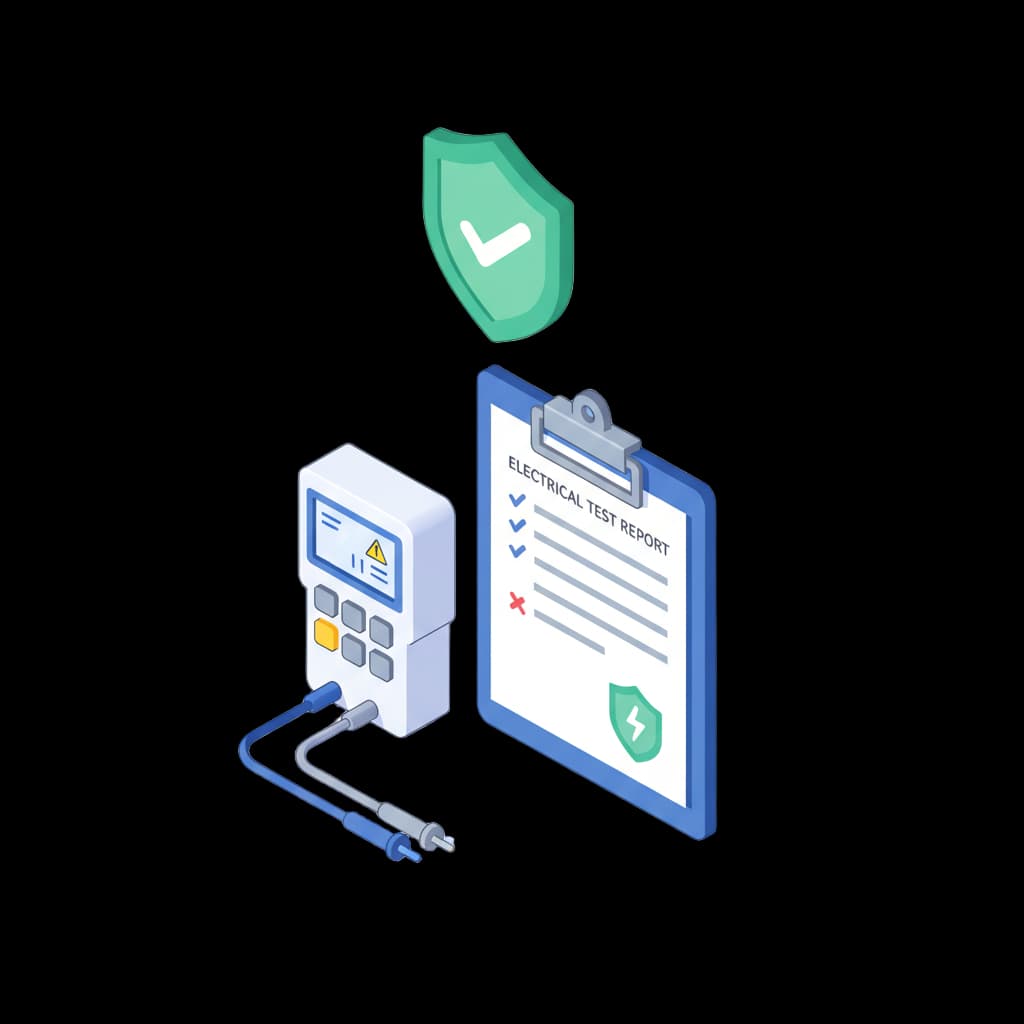
EICR (Electrical Installation Condition Report)
Professional EICR inspection by qualified electricians. Full condition report with classification codes. Qualified and insured.

Landlord Electrical Certificate
Legally required electrical safety inspection for rental properties. Compliant EICR with landlord-specific guidance. Qualified and insured.
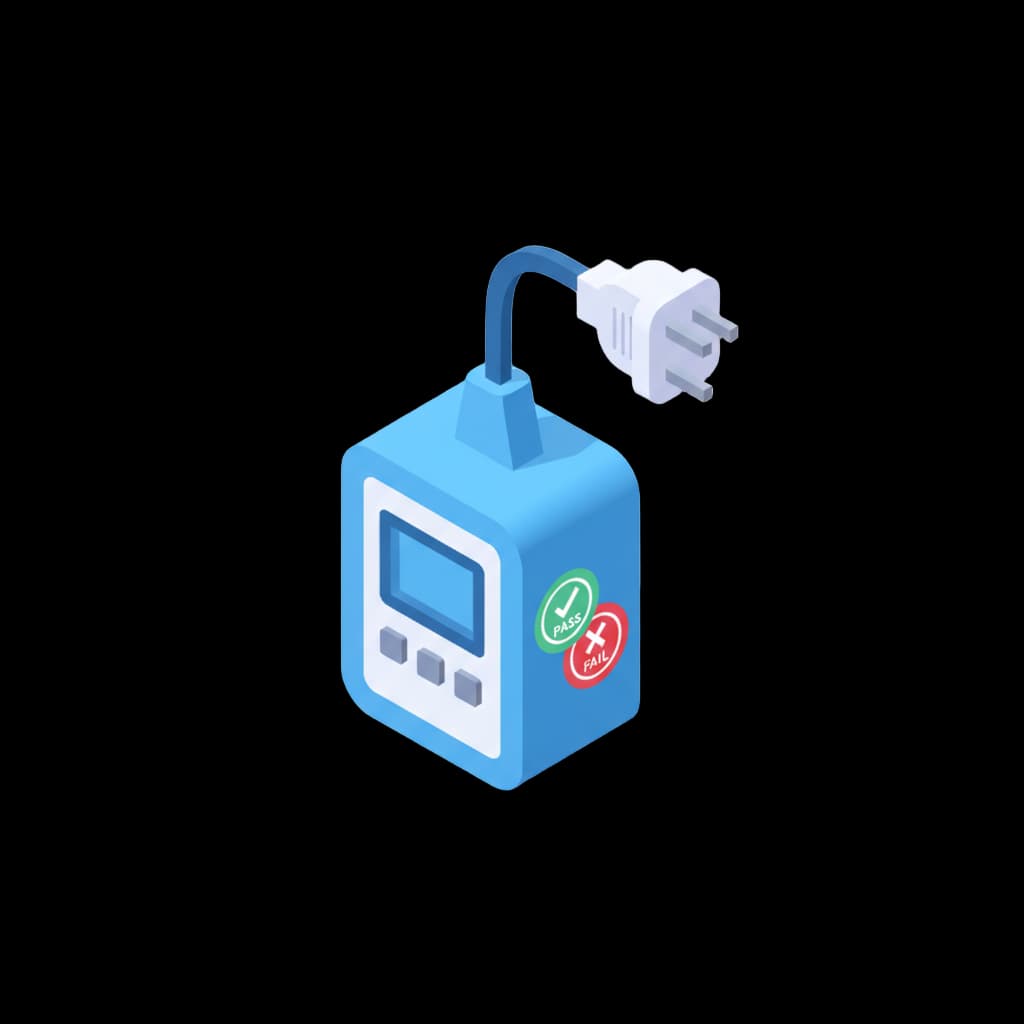
PAT Testing (Portable Appliance Testing)
Portable Appliance Testing for homes and businesses. Visual inspection and electrical safety tests on all portable equipment. Qualified and insured.

Pre-Purchase Electrical Survey
Electrical survey before buying a property. Full inspection of wiring, consumer unit, and safety systems. Qualified and insured.
Fire Alarm Testing
Professional fire alarm testing and certification. BS 5839 compliant inspection, testing, and servicing for domestic and commercial systems. Qualified and insured.
Find emergency lighting installation & testing near you
Browse qualified electricians for emergency lighting installation & testing by London borough.
Need emergency lighting installation & testing?
Describe what you need to Sparky and we'll match you with a qualified electrician near you.
Book an ElectricianFind a Local Electrician
Need a qualified electrician? Browse all London electricians or find one in a borough near you.