What You Can Legally Do Yourself
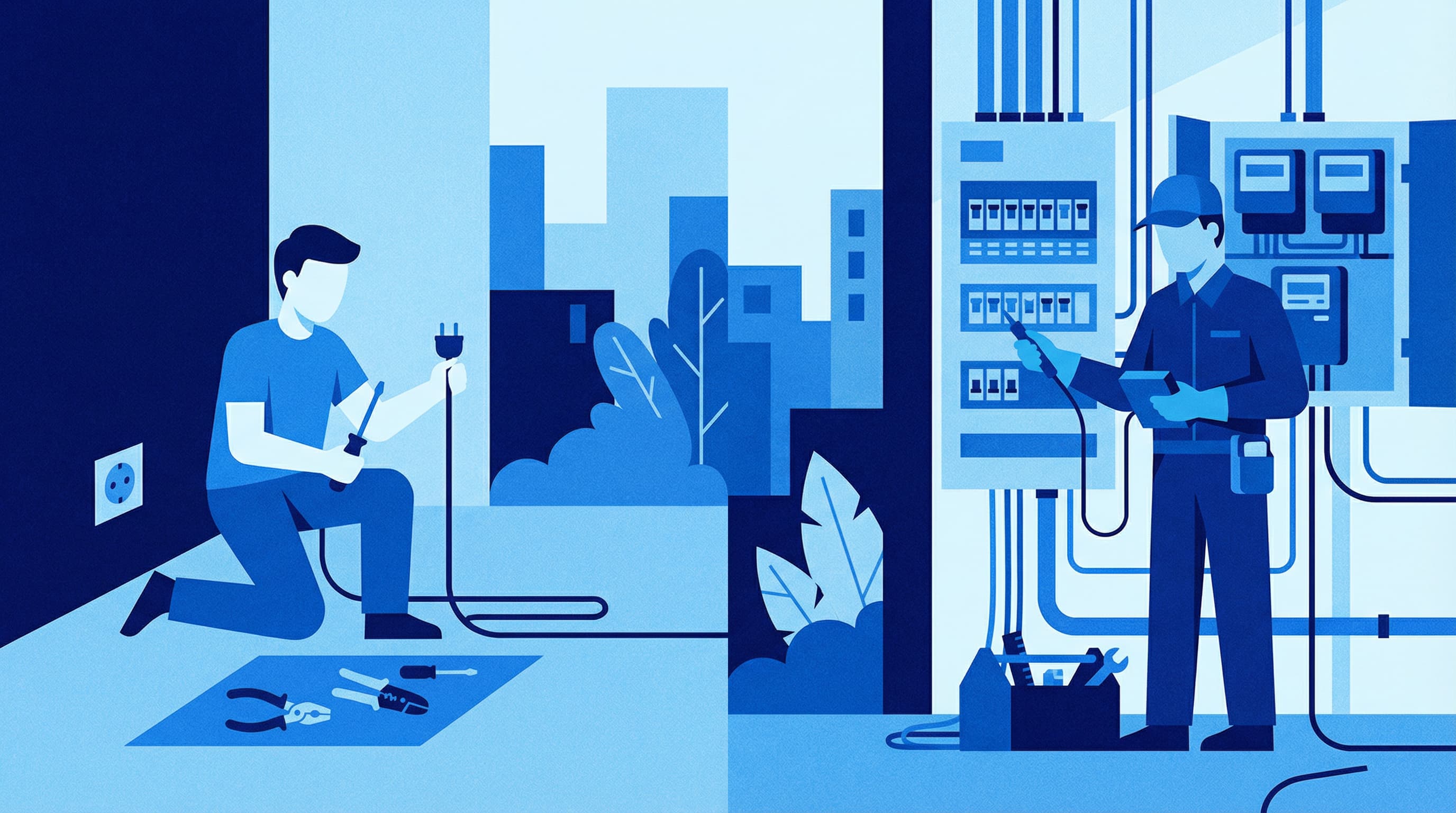
Contrary to popular belief, you are legally allowed to do some electrical work in your own home without being a qualified electrician. The key is understanding the boundary between minor work and "notifiable" work that falls under Part P of the Building Regulations.
Work you can do yourself (minor electrical work):
- Replacing a light fitting like-for-like (e.g., swapping one pendant for another)
- Replacing a damaged socket faceplate or light switch (like-for-like)
- Replacing a plug or fuse on an appliance
- Adding a fused spur to an existing ring circuit (outside special locations)
- Installing low-voltage equipment (e.g., doorbell, thermostat, alarm sensors)
- Repairing a damaged cable with appropriate connectors
Work that is NOT minor and requires a qualified electrician or building control notification:
- Installing a new circuit (e.g., a new ring main or dedicated circuit)
- Replacing a consumer unit or fuse box
- Any electrical work in a bathroom or kitchen (within special zones)
- Any electrical work outdoors or in a garden building
- Adding a new socket on a new spur (in some circumstances)
- Wiring for an electric shower, cooker, or EV charger
- Any electrical work associated with a house extension or loft conversion
Even for work you can legally do, you must still comply with BS 7671 (the Wiring Regulations). If your DIY work causes a fire or injury, you could be held legally responsible. The question isn't just "Am I allowed?" but "Am I competent to do this safely?"
What Requires a Qualified Electrician
Part P of the Building Regulations (applicable in England and Wales) classifies certain electrical work as "notifiable." This means it must either be carried out by an electrician registered with a competent person scheme (NICEIC, NAPIT, ELECSA) or inspected and signed off by your local building control department.
In practice, the following always requires professional involvement:
| Type of Work | Why It's Notifiable | Typical Professional Cost |
|---|---|---|
| Consumer unit replacement | Controls all circuits; safety-critical | £500–£1,200 |
| New circuit installation | Affects overall system capacity and safety | £200–£500 per circuit |
| Bathroom electrical work | Water + electricity = extreme danger | £150–£600 |
| Kitchen electrical work (new circuits) | Wet environment with high-power appliances | £200–£800 |
| Outdoor/garden electrical work | Exposed to weather; higher shock risk | £200–£1,000 |
| Electric shower installation | High current draw; water proximity | £300–£600 |
| Rewiring (full or partial) | Major installation work | £2,500–£10,000+ |
If you do notifiable work yourself without building control sign-off, you'll face problems when selling your property. Solicitors will ask for Part P certificates, and their absence can delay or derail a sale. You may need to pay for retrospective inspection and testing (£200–£400), or even have work redone entirely.
Scotland and Northern Ireland have similar but slightly different regulations. In Scotland, all electrical work must comply with the Building (Scotland) Regulations, and non-domestic work must be verified by an approved certifier.
Part P Building Regulations Explained
Part P was introduced in 2005 to reduce the alarming number of deaths and fires caused by poor-quality electrical work in homes. Before Part P, anyone could legally rewire their house with no oversight. The results were predictable — and sometimes fatal.
How Part P works:
- Notifiable electrical work must be either carried out by an electrician registered with a competent person scheme or inspected by building control.
- Registered electricians (NICEIC, NAPIT, ELECSA) can "self-certify" their work — meaning they inspect, test, and sign off their own work, then notify building control on your behalf. No separate inspection is needed.
- If you use a non-registered electrician (or do the work yourself), you must apply to your local building control department before starting the work. They will inspect the work and charge a fee, typically £200–£350.
What happens if you ignore Part P?
- Your local authority can require you to remove or alter non-compliant work, even if it's been completed.
- You may face a fine of up to £5,000 under the Building Act 1984 for failing to comply with building regulations.
- Your home insurance may be invalidated. If a fire starts due to non-compliant wiring, your insurer can refuse to pay out.
- Selling your property becomes difficult. Conveyancing solicitors routinely request Part P certificates, and their absence raises red flags.
The cost of getting building control sign-off (£200–£350) or using a registered electrician is trivial compared to these potential consequences. Part P exists to protect you and your family — work within it, not around it.
The Real Costs of DIY Gone Wrong
The financial argument for DIY electrics — "I'll save money by doing it myself" — often backfires spectacularly. Here are the real costs when DIY electrical work goes wrong:
Fire damage: Electrical faults are the leading cause of accidental house fires in the UK, responsible for approximately 14,000 fires per year. Incorrect wiring, overloaded circuits, and poor connections are common triggers. A house fire can cause tens or hundreds of thousands of pounds in damage — and that's before considering the risk to life.
Insurance rejection: Home insurers can and do reject claims where the cause is traced to non-compliant DIY electrical work. If your DIY rewire causes a fire, you could lose your home and have no insurance payout to rebuild. Some insurers will also cancel your policy entirely if they discover unqualified electrical work during a claim investigation.
Retrospective costs: When DIY electrical work is discovered during a property sale, the buyer's solicitor will demand either a Part P certificate or a full inspection by a registered electrician. If the work doesn't meet standards — and DIY work frequently doesn't — you'll pay for both the inspection and the remedial work. Costs for rectifying DIY electrical work typically range from £500 to £3,000+, depending on the extent.
Personal injury: Working with mains electricity (230V in the UK) is inherently dangerous. Contact with live conductors can cause electric shock ranging from a painful jolt to cardiac arrest and death. The UK sees approximately 30 electrocution deaths per year, with a significant proportion involving DIY work.
Fines: Carrying out notifiable electrical work without building control notification can result in prosecution under the Building Act 1984. Fines can reach £5,000, plus the cost of rectification.
When DIY Makes Sense
Despite the risks above, there are situations where doing your own minor electrical work is perfectly reasonable — provided you're competent and careful:
- Changing light bulbs and fuses: This is basic maintenance that anyone can do. Turn off the switch before changing a bulb, and use the correct fuse rating for appliances (usually printed near the plug or in the manual).
- Replacing a light fitting like-for-like: Swapping a pendant for another pendant, or a ceiling rose for a new one of the same type, is minor work. Turn off the lighting circuit at the consumer unit, verify the circuit is dead with a voltage tester (£15–£25 from a DIY store), and follow the manufacturer's instructions carefully.
- Replacing damaged socket or switch faceplates: If the existing wiring and back box are in good condition, replacing the visible faceplate is straightforward. Again, isolate the circuit first and test with a voltage tester.
- External/visible cable routing: Running a TV aerial cable, ethernet cable, or other low-voltage cabling is not regulated electrical work and can be done by anyone with basic DIY skills.
Essential safety rules for any DIY electrical work:
- Always turn off the relevant circuit at the consumer unit — not just the light switch
- Use a voltage tester to confirm the circuit is dead before touching any wires
- Never work on live circuits under any circumstances
- If you're unsure about anything, stop and call a professional
- Take photos of the existing wiring before disconnecting anything
The golden rule: if the task requires you to do anything more than swap one component for an identical replacement, call an electrician. The money you save isn't worth the risk.
How to Save Money the Right Way
If you want to reduce your electrical work costs without cutting corners on safety, here are legitimate strategies:
- Get multiple quotes: Three quotes from different registered electricians give you a reliable price benchmark. Significant variation (more than 30%) between quotes warrants investigation — the cheapest may be missing something, or the most expensive may be overcharging.
- Bundle jobs together: If you need several electrical tasks done, combining them into one visit saves on separate booking fees and reduces setup time. An electrician already on-site can add a socket or replace a switch for a fraction of the cost of a separate visit.
- Do the non-electrical prep work: You can save money by doing tasks that don't involve electrics: moving furniture away from walls, clearing loft spaces for access, lifting carpet (not floorboards) near areas where cables will be run, and chasing out plaster channels if you're confident with a chisel.
- Supply your own fittings: Buying your own light fittings, socket faceplates, and switches can save money compared to the electrician's markup. Discuss this upfront — most electricians are happy to fit customer-supplied materials, though they won't warranty them.
- Choose standard over premium: Basic white plastic sockets and switches from reputable brands (MK, BG, Schneider) cost a fraction of designer finishes and work identically. The wiring behind them is the same quality either way.
- Time it right: Electricians are typically busiest in autumn and winter (heating-related work, pre-Christmas projects). Spring and early summer often offer better availability and sometimes lower rates.
- Use platforms like Sparky: Platforms that match you with vetted electricians based on your specific job can provide competitive, transparent pricing without the time-consuming process of contacting multiple tradespeople individually.
The bottom line: paying a qualified electrician £200 for a job is always better than saving £200 by doing it yourself and risking a £50,000 insurance claim rejection, a £5,000 fine, or worse. Professional electrical work is one of the best investments you can make in your home's safety.