Average Electrician Hourly Rates in 2026
In 2026, the average electrician hourly rate across the UK falls between £45 and £85 per hour, depending on location, experience, and the type of work involved. This represents a modest increase from previous years, driven by rising material costs and higher demand for skilled tradespeople.
Here's a breakdown of typical hourly rates by electrician level:
| Electrician Level | Hourly Rate |
|---|---|
| Apprentice (supervised) | £20–£30 |
| Qualified electrician | £45–£65 |
| Experienced/specialist | £60–£85 |
| Master electrician | £70–£100+ |
These rates typically cover labour only. Materials, parts, and any certification fees (such as for Part P building regulations compliance) are usually charged separately. Always ask for an itemised quote so you can see exactly what you're paying for.
It's worth noting that many electricians prefer to quote a fixed price for specific jobs rather than charging hourly. This can work in your favour for well-defined tasks like installing a new socket or replacing a light fitting, where the electrician knows exactly how long it will take.
London vs the Rest of the UK
Location is the single biggest factor affecting electrician rates in the UK. London and the South East consistently command the highest prices, while rates in the Midlands, North, and other regions are notably lower.
| Region | Average Hourly Rate |
|---|---|
| Central London | £70–£100 |
| Greater London | £60–£85 |
| South East | £55–£75 |
| South West | £45–£65 |
| Midlands | £40–£60 |
| North West | £40–£60 |
| North East | £35–£55 |
| Scotland | £40–£60 |
| Wales | £35–£55 |
| Northern Ireland | £35–£50 |
The premium in London reflects higher overheads — van parking, congestion charges, insurance, and the general cost of living all push prices up. An electrician working in Zone 1 might spend £20–£30 on parking and congestion charges alone before they even start the job.
If you live in a commuter town or on the outskirts of a major city, you may find better rates by choosing a local electrician rather than one travelling from the city centre. Travel time is money, and many electricians factor journey time into their quotes.
What Affects an Electrician's Rate
Understanding what drives electrician pricing helps you evaluate whether a quote is fair. Several key factors influence how much you'll pay:
- Qualifications and accreditations: Electricians registered with NICEIC, NAPIT, or ELECSA have invested in maintaining professional standards. Their rates may be slightly higher, but they can self-certify notifiable work under Part P, saving you the cost of a separate building control inspection (typically £200–£300).
- Experience and specialisation: A specialist in EV charger installations or commercial fit-outs will typically charge more than a general domestic electrician. Specialist knowledge commands a premium.
- Time of day and urgency: Standard working hours (8am–6pm, Monday to Friday) attract the lowest rates. Evening and weekend work typically costs 25–50% more, and emergency call-outs can be double the standard rate.
- Job complexity: First-fix wiring in a new build is straightforward compared to rewiring a Victorian terrace with lath-and-plaster walls. Difficult access, old wiring, and asbestos all add time and cost.
- Insurance and overheads: A properly insured electrician carrying public liability insurance (typically £2–5 million), professional indemnity, and employer's liability (if they have staff) will factor these costs into their rates.
VAT is another consideration. Electricians earning over the VAT threshold (£90,000 in 2026) must charge 20% VAT on top of their rates. Smaller sole traders below this threshold won't charge VAT, which can represent a genuine saving on larger jobs.
Day Rates vs Hourly Rates
Many electricians offer a day rate as an alternative to hourly pricing, which can work out cheaper for larger jobs. A typical day rate in 2026 ranges from £300 to £500 across most of the UK, rising to £400–£650 in London.
A "day" usually means 8 hours of work, roughly 8:30am to 4:30pm with a lunch break. If the job runs over, you'll typically be charged an hourly rate for extra time. Always clarify this upfront to avoid surprises.
Day rates tend to work better for:
- Rewiring projects or partial rewires
- Multiple tasks in the same property (e.g., new sockets, lighting changes, and a consumer unit upgrade)
- First or second fix work during a renovation
- Any job expected to take a full day or more
For smaller jobs — replacing a light switch, adding a single socket, or diagnosing a fault — an hourly rate or a fixed price usually makes more sense. A day rate for a two-hour job would be poor value.
Emergency Electrician Rates
Electrical emergencies don't wait for convenient times, and the rates reflect that. If you need an emergency electrician outside standard hours, expect to pay significantly more:
| Timing | Typical Rate |
|---|---|
| Standard hours (Mon–Fri) | £45–£85/hr |
| Evenings (after 6pm) | £70–£120/hr |
| Weekends | £80–£130/hr |
| Bank holidays | £100–£150/hr |
| Night-time (midnight–6am) | £100–£180/hr |
Most emergency electricians also charge a minimum fee of £60–£150 on top of their hourly rate. This covers their travel time and the disruption to their schedule. Some will deduct the minimum fee from the final bill if you proceed with the repair.
Before calling an emergency electrician, check whether the situation is genuinely dangerous. If your power has tripped and you can safely isolate the circuit at the consumer unit, it may be worth waiting until morning and saving hundreds of pounds. However, burning smells, sparking, or exposed wiring always warrant an immediate call.
How to Get the Best Value
Getting good value from an electrician doesn't mean finding the cheapest one — it means getting quality work at a fair price. Here's how to ensure you're getting the best deal:
- Get three quotes: This is the golden rule. Three quotes from different electricians give you a reliable benchmark. If one quote is significantly lower than the others, ask why — they may be cutting corners or missing something in their assessment.
- Check credentials: Verify your electrician is registered with a competent person scheme (NICEIC, NAPIT, ELECSA, or equivalent). You can check online at the scheme's website. This isn't just about quality — it means they can self-certify work, saving you money on building control.
- Bundle jobs together: If you have multiple electrical tasks, getting them done in one visit saves on separate booking fees and minimises set-up time. An electrician who's already on-site can add a socket or swap a light fitting for a fraction of what a separate visit would cost.
- Be flexible on timing: If your job isn't urgent, let the electrician fit you in during a quieter period. Many will offer better rates for work that can be scheduled around their existing commitments.
- Prepare the workspace: Moving furniture, clearing access to the consumer unit, and having the area ready saves the electrician time — and if they're charging hourly, that saves you money.
Finally, always ask what's included in the quote. A good electrician will specify labour, materials, certification, and any follow-up visits needed. The cheapest quote that excludes certification or testing could end up costing more in the long run.
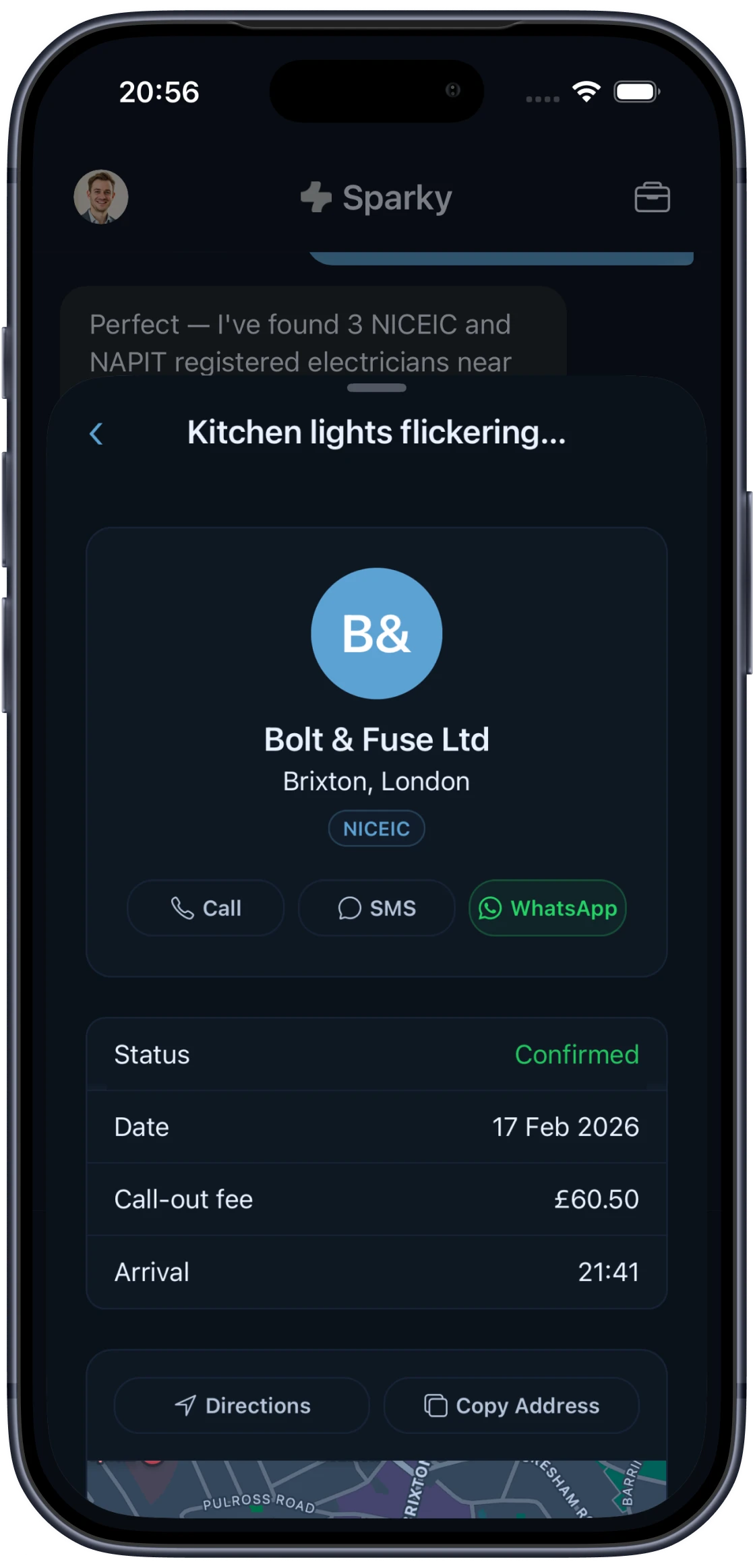
Using a platform like Sparky can simplify this process — describe your job and get matched with vetted, local electricians who provide transparent pricing upfront.