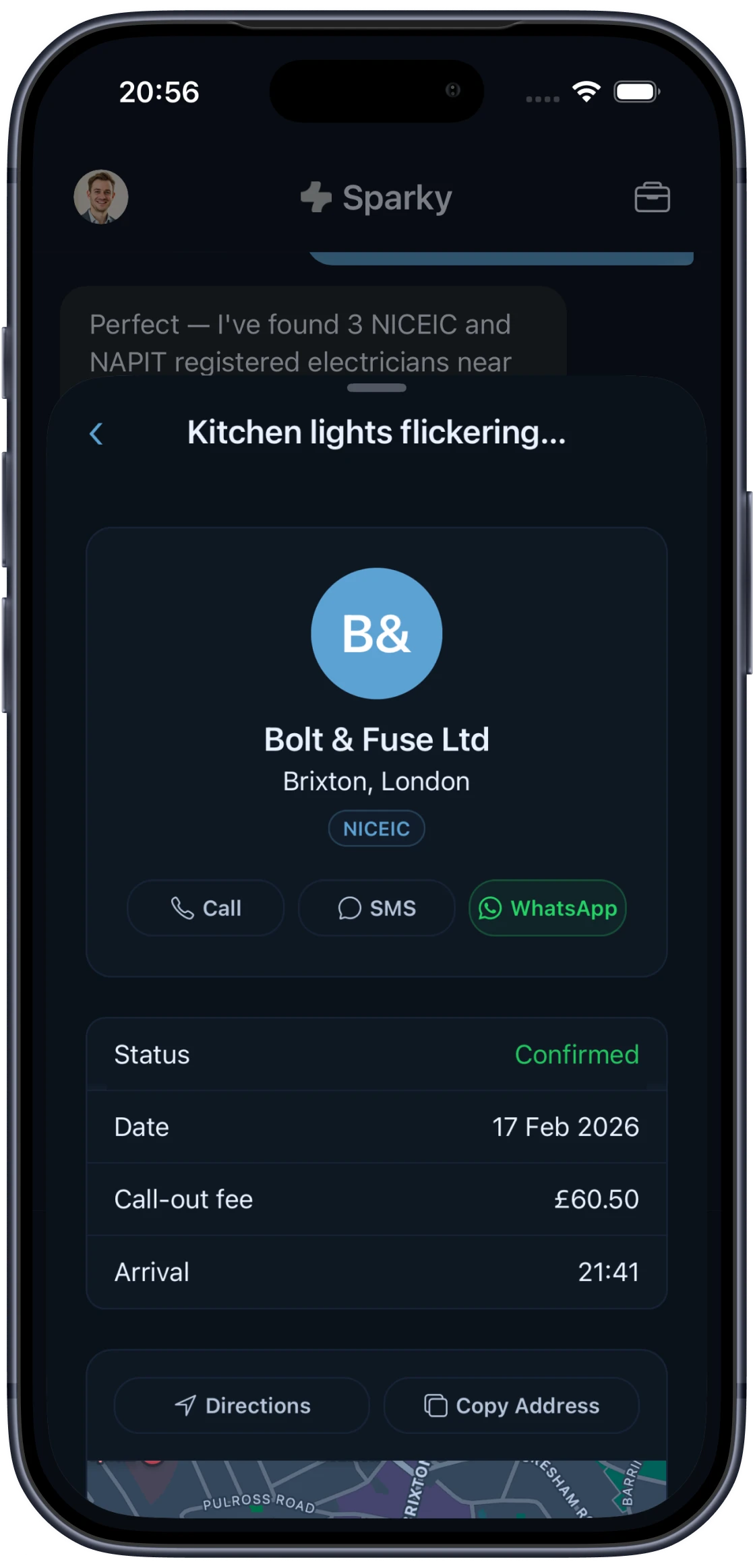
What Is a Call-Out Fee?
A call-out fee is a fixed charge an electrician applies simply for coming to your property. It covers their travel time, fuel, parking, and the opportunity cost of blocking out time in their schedule. Think of it as a booking fee — it guarantees the electrician turns up, regardless of how long the actual work takes.
Call-out fees are separate from labour charges. Once the electrician arrives and begins work, you'll typically pay their hourly rate on top of the call-out fee. Some electricians absorb the call-out fee into the total job cost if you proceed with the work, so it's always worth asking.
In London, call-out fees tend to be higher than the rest of the UK due to congestion charges, ULEZ compliance costs, expensive parking, and longer travel times caused by traffic. An electrician crossing London might spend 90 minutes in traffic for a job that takes 30 minutes — and their pricing reflects this reality.
Average London Call-Out Fees in 2026
Based on current market data, here's what you can expect to pay for an electrician call-out fee in London in 2026:
| Type of Call-Out | Average Fee |
|---|---|
| Standard (Mon–Fri, daytime) | £60–£95 |
| Evening (after 6pm) | £80–£120 |
| Weekend | £90–£130 |
| Bank holiday | £100–£150 |
| Emergency (any time) | £100–£180 |
These fees vary by area within London. Central London (Zones 1–2) tends to attract the highest fees due to congestion charges and parking costs. Outer London boroughs like Bromley, Croydon, or Havering are often closer to the lower end of these ranges.
For comparison, call-out fees outside London typically range from £40 to £75 for standard daytime visits. The London premium of 30–50% reflects the genuine additional costs of operating in the capital.
Some electricians operating in London have started charging a flat rate that includes the first 30 minutes of work within the call-out fee. This can represent better value if your job is straightforward — like resetting a tripped RCD or diagnosing a dead socket.
What's Included in a Call-Out Fee
Call-out fees should cover the electrician's time getting to your property, but what else is included varies between companies. Here's what you should expect and what to ask about:
- Always included: Travel to your property, initial assessment of the problem, and a verbal explanation of what needs doing.
- Sometimes included: The first 15–30 minutes of labour, a written quote for further work, or basic diagnostic testing.
- Rarely included: Materials, parts, certification, or follow-up visits.
Before booking, ask the electrician specifically: "What does your call-out fee include, and when does the hourly rate start?" A reputable electrician will answer this clearly. If they're vague or evasive, that's a red flag.
Some electricians offer a "diagnostic fee" instead of a call-out fee. This is typically £80–£120 in London and covers a thorough investigation of the fault, including testing with professional equipment. If the fault is simple, they'll often fix it within the diagnostic visit at no extra charge.
Emergency vs Standard Call-Outs
Understanding the difference between an emergency and a standard call-out can save you a significant amount of money. Emergency call-outs in London typically cost £100–£180 compared to £60–£95 for a standard visit — that's potentially double the price.
Situations that genuinely warrant an emergency electrician include:
- Burning smell from sockets, switches, or the consumer unit
- Sparking or arcing from any electrical fitting
- Complete power loss that isn't caused by a tripped breaker or power cut in your area
- Exposed live wiring, particularly where children or pets could come into contact
- Electrical shock received from an appliance or fitting
- Water ingress near electrical installations
Situations that can usually wait until normal working hours include:
- A single tripped breaker that resets and stays on
- One dead socket or light (if other circuits are working)
- Intermittent flickering lights
- A non-functioning doorbell or extractor fan
If you're unsure whether your situation is an emergency, a good test is: "Is there an immediate risk to life or property?" If the answer is no, it can probably wait until morning — and save you £50–£100 in the process.
When a Call-Out Fee Is Worth It
Paying a call-out fee can feel frustrating, especially if the fix turns out to be simple. But there are clear situations where it's money well spent:
- Safety concerns: If you suspect a fault that could cause a fire or electric shock, getting a professional assessment is never a waste of money. Electrical fires cause over 14,000 incidents per year in the UK.
- Before buying a property: Paying an electrician to inspect the electrics before you commit to buying a house can reveal issues worth thousands in repairs. The call-out fee is trivial compared to discovering knob-and-tube wiring after completion.
- Persistent tripping: If your RCD or MCB keeps tripping and you can't identify the cause, a diagnostic visit can pinpoint the faulty circuit and prevent a potential fire hazard.
- When you need certification: Some insurance claims or property sales require an Electrical Installation Condition Report (EICR). The call-out fee is the starting point for this essential documentation.
To get the most value from a call-out visit, make a list of all electrical issues in your property — even minor ones. The electrician is already there and may be able to address small items within the visit or provide a bundled quote that saves you a second call-out fee.
Platforms like Sparky can help you find electricians in your area with transparent pricing and no hidden call-out fees. You'll see the total cost upfront before booking, so there are no surprises.