What Counts as an Electrical Emergency
Not every electrical problem is an emergency, and understanding the difference can save you hundreds of pounds. A genuine electrical emergency involves an immediate risk to life or property. Here are situations that warrant an emergency call-out:
- Burning smell from electrical fittings: A persistent burning or acrid smell from sockets, switches, the consumer unit, or any electrical fitting suggests overheating wiring or components. This is a fire risk — turn off the affected circuit at the consumer unit and call immediately.
- Sparking or arcing: Visible sparks from a socket, switch, or any electrical point indicates a dangerous fault. Do not use the affected fitting. Isolate the circuit if you can safely do so.
- Electric shock: If someone receives an electric shock (beyond a minor static discharge) from an appliance, socket, or light switch, this indicates a serious earthing or insulation fault that needs urgent investigation.
- Complete power loss (not a power cut): If your property has lost power but your neighbours haven't, and you can't restore it by resetting the consumer unit, there may be a dangerous fault in your installation.
- Exposed live wiring: Damaged cables with live conductors exposed, particularly in areas accessible to children or pets, are an immediate electrocution risk.
- Water near electrics: A leak or flood affecting electrical installations (sockets, the consumer unit, ceiling lights) creates a serious electrocution and fire risk.
- Consumer unit smoking or buzzing loudly: Strange sounds or visible smoke from the consumer unit suggest a failing component that could start a fire.
Situations that are not emergencies (even though they're inconvenient) include: a single dead socket, a tripped breaker that resets and stays on, a broken doorbell, or flickering LED bulbs. These can wait until normal working hours, saving you the emergency premium.
Average Emergency Call-Out Costs
Emergency electricians charge a premium for out-of-hours availability. Here's what you can expect to pay across the UK in 2026:
| Component | Outside London | London |
|---|---|---|
| Minimum fee | £80–£130 | £100–£180 |
| Hourly rate (evening) | £60–£100 | £80–£130 |
| Hourly rate (weekend) | £70–£110 | £90–£140 |
| Hourly rate (night/bank holiday) | £90–£140 | £120–£180 |
| Minimum charge (typical) | £150–£250 | £200–£350 |
Most emergency electricians have a minimum charge that covers travel and at least one hour of labour. Even if the fix takes 15 minutes, you'll typically pay the minimum. This is standard practice and reflects the disruption to the electrician's personal time.
For a typical emergency — such as diagnosing and fixing a fault that's tripped the main switch and won't reset — expect a total bill of £200–£400 depending on the time of day and complexity. A straightforward RCD fault (like a failed appliance causing tripping) might be at the lower end, while a cable fault requiring investigation could reach the higher end.
Some emergency electricians offer a "make safe" service rather than a full repair. They'll isolate the dangerous element and make the property safe, with the full repair scheduled for normal working hours at standard rates. This can be a cost-effective approach for non-critical emergencies.
What to Do While Waiting for an Emergency Electrician
While waiting for the electrician to arrive, there are important steps you can take to keep your household safe:
If there's a burning smell or smoke:
- Turn off the main switch on your consumer unit (the big switch at the top)
- Do not attempt to investigate the source yourself
- Open windows for ventilation
- If you see actual flames, call 999 immediately — this is a fire service matter first, electrical second
- Do not turn the power back on until the electrician has inspected the installation
If there's water near electrics:
- Do not touch any electrical fittings with wet hands or while standing in water
- If you can safely reach the consumer unit (without standing in water), turn off the main switch
- Stop the water source if possible (turn off the stopcock or catch the leak)
- Keep everyone, especially children and pets, away from the affected area
If you've lost all power:
- Check with your neighbours — if they've also lost power, it's a supply issue and you should contact your DNO (Distribution Network Operator), not an electrician
- Try resetting the main switch on your consumer unit. If it trips again immediately, leave it off and wait for the electrician
- If individual MCBs have tripped, try switching them off and then on one at a time. If one specific circuit trips the RCD, leave it off and use the other circuits
- Unplug any appliances you were using when the power went off — a faulty appliance is the most common cause of RCD tripping
Keep a torch (or your phone) readily accessible. If you have young children or vulnerable people in the property, ensure they're comfortable and safe while you wait.
Finding a Reliable Emergency Electrician
When you're in an emergency, the temptation is to call the first electrician you find. But even in a crisis, taking five minutes to choose wisely can save you from poor work or inflated prices.
What to look for:
- Clear pricing upfront: A reputable emergency electrician will tell you their minimum fee and hourly rate before they set off. If they're vague about costs, move on.
- Competent person registration: Even in an emergency, use a registered electrician (NICEIC, NAPIT, ELECSA). Ask for their registration number — you can verify it online.
- Response time commitment: Good emergency services will give you a realistic arrival time. Beware of anyone promising to be there in "10 minutes" from across the city.
- Reviews and reputation: A quick check of Google reviews takes 30 seconds and can reveal whether previous customers had good experiences.
Red flags to avoid:
- Refusing to give a price over the phone ("We'll see when we get there")
- Demanding large upfront payments before attending
- No verifiable qualifications or registration
- Pressure to agree to extensive (and expensive) work immediately
- Quoting a price that sounds dramatically higher than the ranges in this article
If possible, save the number of a trusted local electrician in your phone before you need them. Ask friends, neighbours, or your landlord for recommendations. Having a go-to contact eliminates the stress of searching during an emergency.
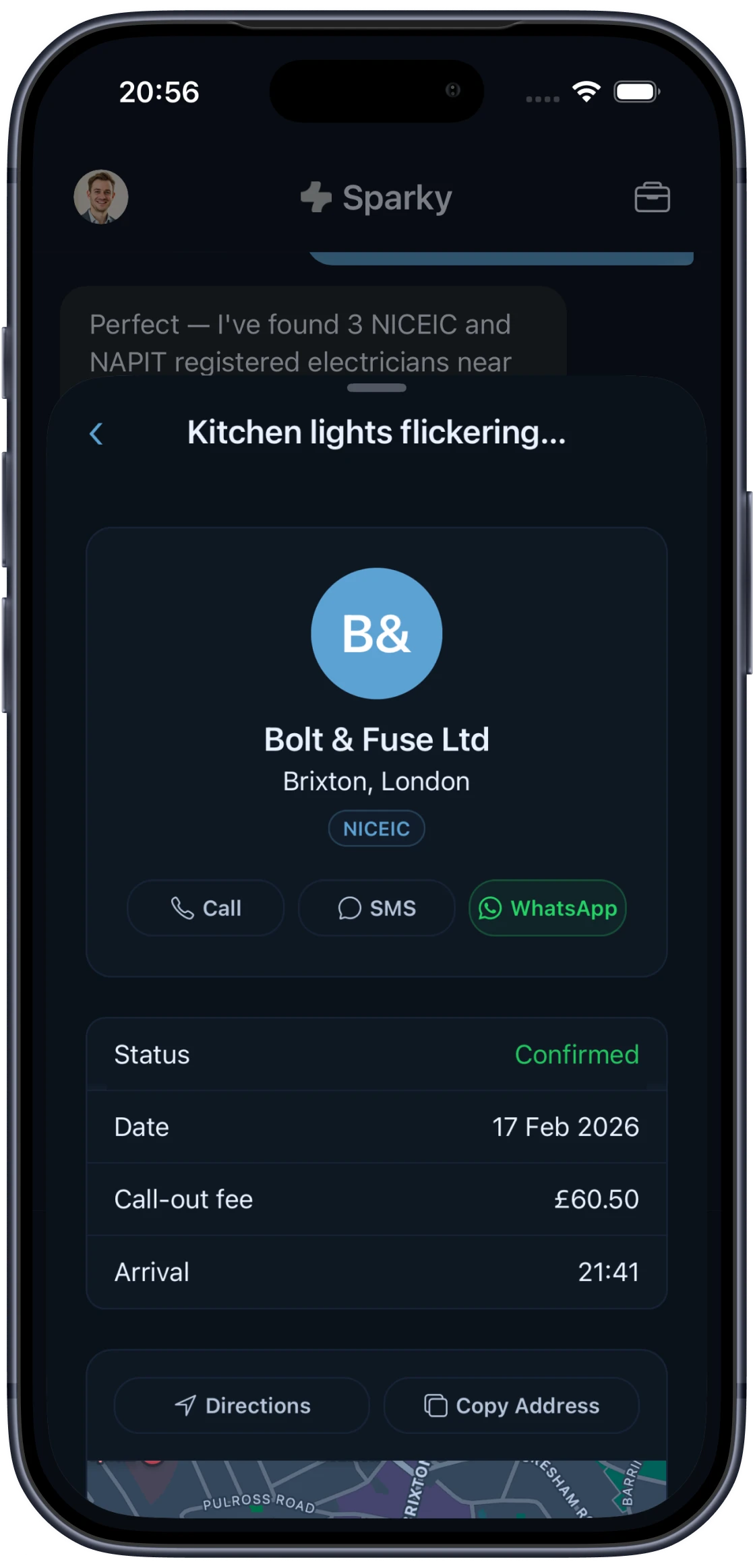
Sparky operates an emergency matching service that connects you with vetted, available electricians in your area, with transparent pricing shown before you book.
Preventing Electrical Emergencies
Most electrical emergencies are preventable with basic maintenance and awareness. Here are practical steps to reduce your risk:
- Get an EICR every 10 years: An Electrical Installation Condition Report identifies deteriorating wiring, failing components, and non-compliant installations before they become dangerous. For older properties, every 5 years is advisable.
- Test your RCD regularly: Your consumer unit has a test button on each RCD (marked with a "T"). Press it every 3 months — the RCD should trip immediately. If it doesn't, call an electrician. This 10-second test could save your life.
- Don't overload sockets: Avoid daisy-chaining extension leads or plugging high-draw appliances (heaters, kettles) into extension leads. Each socket can typically handle 13A (about 3kW). Use the socket overload calculator on the Electrical Safety First website.
- Replace damaged cables and fittings: Cracked sockets, damaged plug cables, and loose switch faceplates should be replaced promptly. These small issues can escalate into serious faults.
- Be cautious with DIY: Under Part P of the Building Regulations, most electrical work in the home must be carried out by a qualified person or inspected by building control. DIY electrical work is a leading cause of electrical fires in the UK.
- Watch for warning signs: Pay attention to intermittent flickering, buzzing sounds from fittings, warm socket faceplates, or a burning smell. These are early warnings of problems that can be fixed cheaply before they become emergencies.
Investing a few hundred pounds in preventive maintenance can save thousands in emergency repairs and, more importantly, protect your family from electrical fire or shock. An annual electrical "health check" — even just a visual inspection by a qualified electrician — is a worthwhile investment.
Insurance Coverage for Electrical Emergencies
Understanding your insurance coverage can help manage the financial impact of an electrical emergency:
Home emergency cover: Many home insurance policies offer optional "home emergency" add-ons (typically £30–£80 per year) that cover emergency call-outs for electrical faults, plumbing emergencies, and boiler breakdowns. These usually cover the minimum fee and the first hour of labour, with a cap of £300–£500 per incident. Check your policy — you may already have this cover without realising it.
Buildings insurance: If an electrical fault causes damage to your property (e.g., an electrical fire damages a wall or ceiling), your buildings insurance should cover the repair costs. However, most policies have an excess of £100–£500, so minor incidents may not be worth claiming for.
Contents insurance: If a power surge or electrical fault damages your appliances or electronics, contents insurance may cover the replacement cost. Document any damaged items and keep the electrician's report as evidence for your claim.
What insurance typically doesn't cover:
- The cost of fixing the electrical fault itself (as opposed to the resulting damage)
- Wear and tear — if the emergency was caused by old, deteriorating wiring, the repair cost is usually your responsibility
- Non-compliant or DIY electrical work that caused the issue
- Consequential losses like food spoilage from a power cut (though some policies include this)
If your property has old wiring and you haven't had an EICR, consider upgrading your insurance to include home emergency cover. The £50–£80 annual premium is a fraction of what a single emergency call-out costs, and it provides peace of mind for unexpected electrical issues.