What Is a Consumer Unit?
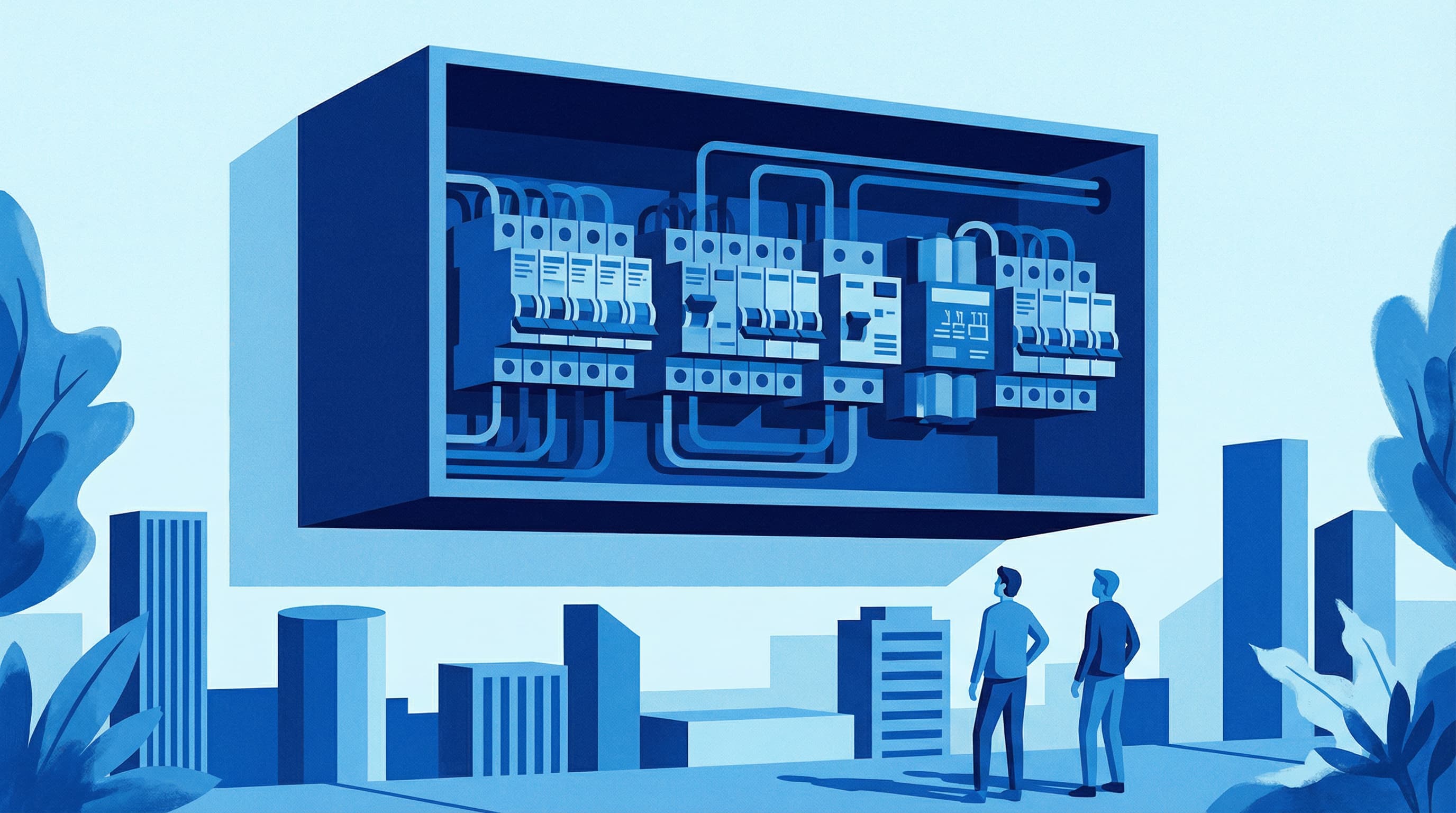
A consumer unit — commonly called a "fuse box" — is the central hub of your home's electrical system. It's the metal or plastic box (usually located near the front door, under the stairs, or in a utility area) where the electricity supply enters your home and is distributed to individual circuits throughout the property.
Every electrical circuit in your home — lighting, power sockets, cooker, shower, immersion heater — connects back to the consumer unit. Each circuit is protected by its own device that will disconnect the power automatically if a fault is detected. This protective function is the consumer unit's primary purpose: to keep you safe from electric shock and fire.
The consumer unit also contains the main switch, which allows you to disconnect the entire electrical supply to your home in an emergency. Knowing where your consumer unit is and how to operate the main switch is essential knowledge for every member of your household.
Consumer units have evolved significantly over the decades. Older homes may still have rewireable fuse boxes with porcelain fuse carriers and fuse wire, while modern installations use consumer units with MCBs, RCDs, or RCBOs that provide far superior protection. If your property still has an old-style fuse box, upgrading is one of the most important safety improvements you can make. For pricing, see our consumer unit upgrade cost guide.
Components: Main Switch, RCDs, MCBs, and RCBOs
Understanding the components inside your consumer unit helps you respond appropriately when something trips and makes informed decisions about upgrades. Here's what each component does:
Main Switch (100A double-pole isolator): This is the large switch at one end of the consumer unit. It disconnects both the live and neutral supply to your entire home. Use this in an emergency — for example, if you smell burning, see sparking, or need to carry out any work on the electrical system. The main switch is rated at 100A, which is the maximum current your supply can deliver.
MCBs (Miniature Circuit Breakers): These protect individual circuits against overload and short circuit faults. Each MCB is rated for a specific current — common ratings are:
- 6A: Lighting circuits
- 16A: Immersion heater, towel rail circuits
- 20A: Radial circuits for specific appliances
- 32A: Ring final circuits (sockets) and cooker circuits
- 40A or 45A: Cooker circuits (for higher-rated ovens) or electric shower circuits
- 50A: Large electric shower or EV charger circuits
RCDs (Residual Current Devices): These monitor the balance between live and neutral current. If they detect a difference (meaning current is leaking to earth — possibly through a person), they trip within 30 milliseconds. In a split-load consumer unit, two RCDs each protect a group of circuits.
RCBOs (Residual Current Breakers with Overcurrent protection): These combine the functions of an MCB and an RCD in a single device. Each RCBO protects an individual circuit against both overcurrent and earth faults. This means a fault on one circuit only trips that circuit's RCBO, leaving all other circuits unaffected — a significant advantage over the split-load RCD arrangement.
What to Do When Circuits Trip
A tripped circuit is one of the most common electrical issues homeowners face. Understanding why circuits trip and how to respond safely will save you unnecessary worry and potentially an expensive emergency call-out.
Step 1: Identify what has tripped. Open the consumer unit cover and look for any switches in the "off" (down) position. Is it an MCB (protecting a single circuit), an RCD (protecting a group of circuits), or an RCBO? This tells you the nature of the fault.
Step 2: If an MCB has tripped, it usually means the circuit is overloaded or there's a short circuit. Unplug all appliances on the affected circuit and try to reset the MCB. If it holds, reconnect appliances one at a time. The one that causes the trip is likely faulty. If the MCB trips immediately with nothing connected, there's a fault in the wiring — call an electrician.
Step 3: If an RCD has tripped, it means current is leaking to earth on one of the circuits it protects. This is potentially more serious, as earth faults can indicate damaged insulation or a fault that could cause electric shock. Try to reset the RCD. If it won't reset, switch off all the MCBs protected by that RCD, then reset the RCD. Switch MCBs back on one at a time to identify the faulty circuit.
Step 4: If an RCD trips repeatedly or immediately, there is a persistent earth fault that needs professional investigation. Do not keep resetting it — repeated RCD trips indicate a genuine safety issue that an electrician should diagnose and repair.
Common causes of tripping:
- A faulty appliance (kettle, washing machine, or hair dryer are frequent culprits)
- Water ingress to an outdoor socket or junction box
- Damaged cable insulation (especially in older properties or after building work)
- An overloaded circuit — too many high-power appliances on the same ring
- Nuisance tripping from older RCDs that have become oversensitive
Signs You Need a Consumer Unit Upgrade
Your consumer unit is the foundation of your home's electrical safety system. If it's outdated or inadequate, it compromises the protection of every circuit in your home. Here are the signs that an upgrade is needed:
- Rewireable fuses: If your consumer unit uses porcelain or bakelite fuse carriers with fuse wire, it dates from before MCBs became standard. Rewireable fuses are less reliable, can be fitted with the wrong rating of wire (creating a fire risk), and provide no RCD protection against electric shock.
- No RCD protection: If your consumer unit doesn't have RCDs or RCBOs, you have no protection against earth faults — the type most likely to cause electric shock. Current regulations (BS 7671 18th Edition) require RCD protection on virtually all circuits.
- Plastic consumer unit: Since January 2016, new consumer units installed in domestic properties must be constructed from non-combustible materials (typically metal). If you have a plastic consumer unit and it's being replaced or modified for any reason, a metal enclosure is now required.
- Insufficient capacity: If you've added circuits over the years (EV charger, electric shower, garden office), your consumer unit may be full with no spare ways. Running out of space leads to dangerous workarounds like double-feeding circuits or connecting new circuits without proper individual protection.
- Frequent tripping or nuisance trips: Older RCDs can become oversensitive, tripping without a genuine fault. While annoying, this is also a safety concern — if the RCD trips so often that residents start leaving it switched off, the protection is lost entirely.
- Physical deterioration: Cracked casings, discoloured components, signs of overheating, or a burning smell all indicate that the unit itself is failing and should be replaced urgently.
A consumer unit upgrade in 2026 typically costs between £250 and £1,200 depending on the specification — from a basic dual-RCD board to a high-integrity board with AFDDs. For a full breakdown by type, see our consumer unit upgrade cost guide. It's one of the best value-for-money safety investments you can make in your home.
Metal vs Plastic Consumer Units
Since January 2016, Amendment 3 to the 17th Edition of BS 7671 has required that all new consumer units installed in domestic premises must be enclosed in a casing made from non-combustible material. In practice, this means metal (typically powder-coated steel) consumer units are now the standard for new installations and replacements.
The regulation was introduced following research showing that consumer units are a common origin point for electrical fires. A metal enclosure contains any arc or fire within the unit, preventing it from spreading to surrounding materials — particularly important when consumer units are often located under stairs, in cupboards full of coats and shoes, or against timber-framed walls.
Key differences between metal and plastic units:
| Feature | Metal Consumer Unit | Plastic Consumer Unit |
|---|---|---|
| Fire containment | Excellent — contains arcs and fire | Poor — can melt and allow fire to spread |
| Compliance (new installs) | Compliant with current regulations | Not compliant for new domestic installations since 2016 |
| Earthing | Requires earthing of the metal enclosure itself | No enclosure earthing needed |
| Cost | Slightly more expensive (£20–£50 more) | Cheaper but no longer compliant for new installs |
| Durability | More robust, better long-term performance | Can become brittle over time, especially in warm locations |
If you currently have a plastic consumer unit, you don't need to replace it immediately — the regulation applies to new installations and replacements. However, if you're having any work done on the consumer unit (such as adding circuits), your electrician may recommend upgrading to a metal unit at the same time. Given the minimal extra cost, this is usually worthwhile.
Consumer Unit Regulations for Modern Homes
The 18th Edition of BS 7671 (with Amendment 2, published 2022) sets out the current requirements for consumer units in UK dwellings. Understanding these standards helps you assess whether your installation meets modern safety expectations.
Current regulatory requirements include:
- RCD protection on all circuits: Regulation 411.3.4 requires RCD protection (30mA) for all socket outlets rated 32A or less, all circuits supplying mobile equipment outdoors, and circuits in bathrooms. In practice, most new installations provide RCD protection on every circuit via RCBOs or dual-RCD arrangements.
- Metal enclosure: As discussed, non-combustible material is required for the consumer unit housing in domestic premises.
- Surge protection: Amendment 2 (2022) introduced a requirement for surge protection devices (SPDs) in most new and upgraded consumer units. SPDs protect against transient overvoltages from lightning strikes and switching surges, which can damage sensitive electronic equipment.
- Arc fault detection: While not yet mandatory in the UK, BS 7671 Amendment 2 recommends the use of Arc Fault Detection Devices (AFDDs) on circuits in premises with sleeping accommodation. AFDDs detect dangerous arc faults (such as damaged cable insulation) that MCBs and RCDs cannot detect. They're likely to become mandatory in future amendments.
- Adequate capacity: The consumer unit should have sufficient ways for all existing circuits plus spare ways for future additions. A minimum of 2–3 spare ways is considered good practice.
When upgrading a consumer unit, a qualified electrician will ensure the new installation complies with all current requirements. This includes testing the earthing arrangement, verifying the adequacy of the main bonding conductors, and issuing a full Electrical Installation Certificate with schedule of test results.
Maintaining Your Consumer Unit
Consumer units require minimal maintenance, but a few simple checks can help ensure yours continues to function correctly and provide the protection it's designed to deliver.
Regular maintenance tasks:
- Test RCDs quarterly: Press the "Test" button on each RCD or RCBO. It should trip immediately. Reset it afterwards. If it doesn't trip, call an electrician — the device may be faulty.
- Visual inspection: Every six months or so, open the consumer unit cover (with the power on — you're just looking, not touching anything inside) and check for signs of discolouration, burning marks, or a burning smell. If you see or smell anything unusual, call an electrician.
- Keep the area clear: Don't store items in front of or on top of the consumer unit. You need to be able to access it quickly in an emergency, and items stacked against it can prevent heat from dissipating.
- Label your circuits: If the circuit labels are missing, faded, or incorrect, ask your electrician to re-label them during their next visit. Knowing which MCB or RCBO controls which circuit is essential for safe isolation during an emergency or when carrying out any work.
- Don't DIY inside the consumer unit: Under no circumstances should you remove the inner cover or touch any components inside the consumer unit. The busbars carry the full supply current at mains voltage, and accidental contact can be fatal. All work inside the consumer unit must be carried out by a qualified electrician.
The best overall maintenance for your consumer unit is a periodic EICR by a qualified electrician. This includes comprehensive testing of every circuit, verification that all protective devices are functioning correctly, and an assessment of whether the installation meets current safety standards. For owner-occupied homes, an EICR every 10 years is recommended — or every 5 years for older properties. For broader prevention, follow our electrical safety tips for homeowners.