Cost Breakdown
| Item | Min | Max | Note |
|---|---|---|---|
| Minimum fee (daytime) | £60 | £100 | Monday to Friday, 8am to 6pm; covers first hour on site |
| Minimum fee (evening/weekend) | £100 | £180 | After 6pm weekdays or any time Saturday/Sunday; covers first hour |
| Minimum fee (bank holiday) | £150 | £250 | Christmas Day, New Year, Easter, and other public holidays |
| Hourly rate after first hour | £50 | £90 | Charged per hour or part-hour beyond the initial call-out period |
| Parts (typical) | £20 | £150 | Common spares: MCBs (£8-15), RCDs (£25-60), fuse carriers, socket faceplates |
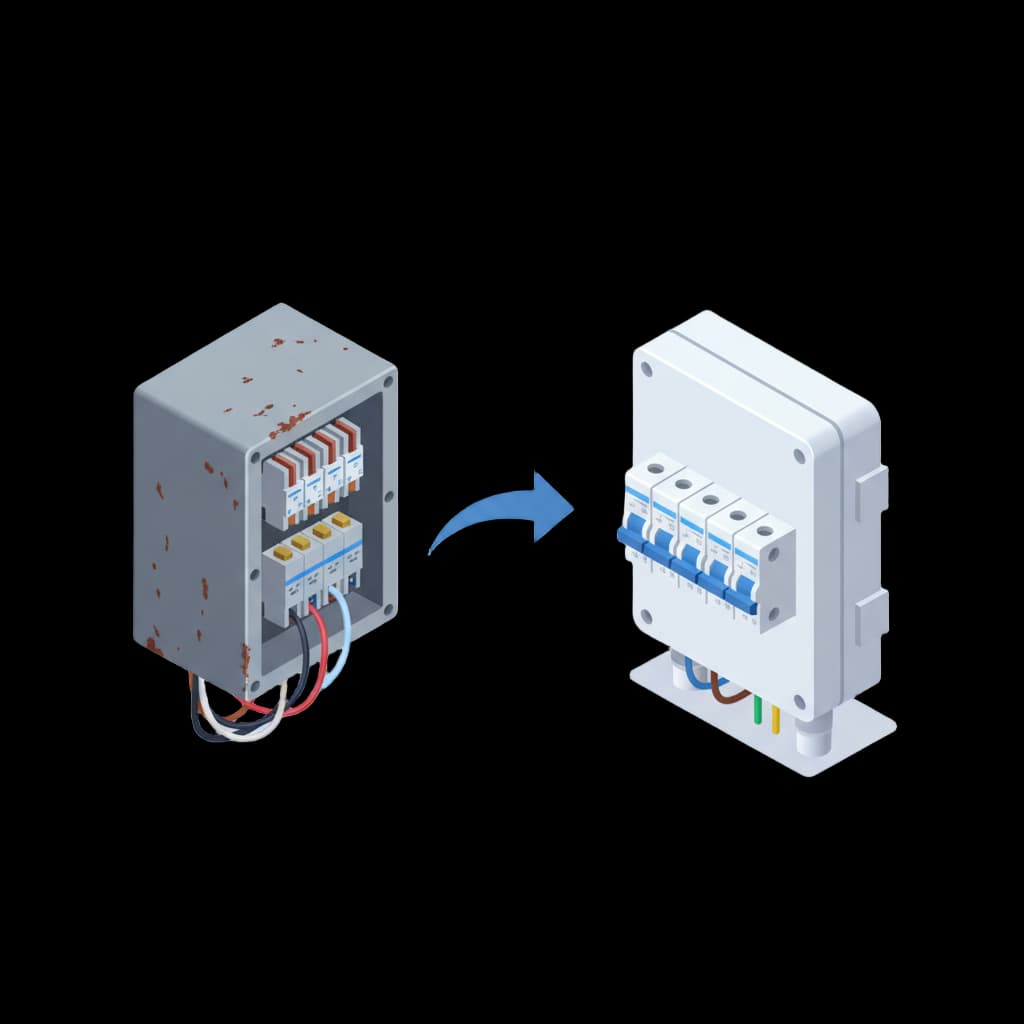
| Consumer unit MCB/RCD replacement | £80 | £180 | If a tripping device has failed and needs swapping out-of-hours |
What's Included
- Rapid attendance — most emergency electricians aim to arrive within 1 to 2 hours for genuine emergencies
- Diagnosis and fault-finding to identify the root cause of the problem
- Immediate repair where possible, using parts carried on the van
- Making the installation safe if a full repair cannot be completed immediately (isolating the faulty circuit and advising on next steps)
- A Minor Works Certificate or equivalent documentation for any work carried out
Factors Affecting Cost
- Time of the call-out. Daytime weekday rates are the cheapest. Evening and weekend rates typically carry a 50-80% premium, and bank holiday rates can be double the standard daytime charge.
- The severity and complexity of the fault. A tripped RCD that just needs resetting is a quick fix, while tracking down a short circuit in buried wiring can take several hours of fault-finding.
- Whether parts are needed. Emergency electricians carry common spares (MCBs, RCDs, fuses, socket faceplates), but less common components may need to be sourced, potentially requiring a follow-up visit.
- Your location. Emergency electricians in central London may charge £150+ for a daytime call-out, while the same visit in a smaller city might be £70-90. Rural areas can also attract higher charges due to travel time.
- Whether the issue is genuinely urgent. Some problems — such as a total power loss, burning smell, or exposed wiring — are genuine emergencies requiring immediate attendance. Other issues, like a single dead socket, can safely wait for a standard appointment at a lower rate.
- Access requirements. If the fault is in a consumer unit behind locked panels, in a loft with restricted access, or requires scaffolding, the time on site increases accordingly.
How Long Does It Take?
Most emergency call-outs are resolved within 1 to 2 hours on site. Simple issues like a tripped RCD, a failed MCB, or a loose connection can be diagnosed and fixed in 30 to 60 minutes. More complex faults — such as intermittent short circuits, water ingress into wiring, or damaged underground cables — may take 2 to 4 hours for fault-finding alone, with a follow-up visit needed for the permanent repair. The electrician will typically make the installation safe on the first visit and schedule the full repair during normal working hours to keep costs down.
Do I Need This?
Call an emergency electrician if you experience a complete power loss that is not caused by a supplier outage (check your neighbours or the UK Power Networks website), a burning smell from sockets, switches, or the consumer unit, visible sparking or arcing, exposed live wiring after damage, or repeated tripping of the main RCD that you cannot reset. These are genuine safety emergencies. For less urgent issues — such as a single dead socket, a non-functioning light, or a circuit that trips occasionally — it is safer and cheaper to wait for a standard daytime appointment. If in doubt, turn off the affected circuit at the consumer unit and call for advice; many electricians will tell you over the phone whether it can wait.
How to Save Money
Check whether the issue is genuinely urgent before calling. A tripped RCD can often be reset yourself by switching it back on at the consumer unit. If it trips again immediately, isolate the circuit and book a standard appointment rather than an emergency one.
Call during daytime hours if possible. If the fault occurs in the evening but you can safely isolate the circuit, waiting until the morning can save £50-100 on the emergency premium.
Ask for a fixed price before the electrician arrives. Many emergency electricians quote a minimum fee plus hourly rate, so you know the cost structure upfront and can avoid surprises.
Use a registered electrician rather than a general 24-hour emergency service. National call-out services often charge a premium and subcontract to local electricians, adding a middle-man fee.
Keep your consumer unit labelled clearly. If you know which circuit has tripped or faulted, you save the electrician diagnostic time, which reduces the bill.
Average Cost Summary
£100–£350
Typical price range for emergency electrician cost in the UK. Prices may vary based on your location, property type, and specific requirements.