The Portfolio Compliance Challenge
Managing EICR compliance for a single property is straightforward. Managing it across a portfolio of 50, 200, or 500+ properties is a fundamentally different challenge — one that requires systems, processes, and proactive planning rather than ad-hoc responses.
The core difficulties of portfolio-scale EICR management include:
- Staggered expiry dates: Properties join the portfolio at different times, and their EICRs were issued on different dates. At any given moment, some EICRs are years from expiry while others are weeks away. Without a tracking system, it is inevitable that some will be missed.
- Varied property types: A typical portfolio includes flats, houses, HMOs, and possibly mixed-use buildings — each with different EICR complexity, cost, and testing time. One-size-fits-all scheduling does not work.
- Landlord communication: Each property has a landlord who needs to approve and fund the EICR. Some landlords are responsive and proactive; others require repeated chasing. Managing these relationships at scale consumes significant administrative time.
- Tenant access: Every EICR requires access to the property, which means coordinating with tenants. Across a large portfolio, access issues — refusals, no-shows, restrictive availability — are a constant source of delay.
- Remedial work cascades: In a large portfolio, a proportion of EICRs will inevitably be Unsatisfactory. Each requires remedial work within 28 days, re-testing, and documentation. Multiple concurrent remediation projects compete for the same electricians and administrative attention.
- Staff turnover: When property managers leave, their portfolio knowledge often goes with them. Without centralised systems, compliance gaps can emerge when portfolios are reassigned.
The consequences of failing to manage these challenges are significant. A single missed EICR expiry puts the landlord at risk of a £30,000 fine and the agent at risk of a professional negligence claim. Across a portfolio, the cumulative risk of ad-hoc management is substantial.
The solution is to treat EICR compliance as a systematic business process — with defined workflows, centralised tracking, clear ownership, and regular reporting. The following sections provide a practical framework for implementing this approach.
Building a Compliance Tracker
A compliance tracker is the foundation of portfolio EICR management. Whether you use purpose-built property management software, a spreadsheet, or a database, the tracker must capture specific data points and support specific workflows.
Essential data fields per property:
- Property address and unique reference number
- Property type: Flat, house, HMO (with licence number), or mixed-use
- Landlord name and contact details
- Current tenant name and contact details
- Last EICR date
- EICR expiry date (typically 5 years from the last inspection, unless the report specifies a shorter interval)
- EICR result: Satisfactory or Unsatisfactory
- Remedial work status: Not required / Required / In progress / Complete
- Remedial work deadline (28 days from EICR date if Unsatisfactory)
- Tenant notification date: Date the EICR was provided to the tenant
- Electrician: Name and competent person scheme registration of the electrician who conducted the EICR
- Document storage link: Digital location of the EICR PDF, remedial certificates, and tenant notification confirmation
- Notes: Any property-specific information (e.g., access difficulties, consumer unit age, previous C3 observations)
Automated alerts:
The tracker must generate alerts at defined intervals before expiry. Recommended trigger points:
- 120 days (4 months): Initial planning alert. Review the property record, identify any known issues, and flag for the next booking cycle.
- 90 days (3 months): Booking alert. Contact the landlord for approval, contact the tenant to arrange access, and book the electrician.
- 60 days (2 months): Follow-up alert. If the EICR has not been booked, escalate — send a formal reminder to the landlord with a copy of the regulatory requirements and potential penalties.
- 30 days (1 month): Urgent alert. If the EICR is still not booked, send a final written warning to the landlord. Consider whether the management agreement allows the agent to arrange the EICR directly and recover costs.
- 0 days (expiry): Compliance breach. Document the breach, notify the landlord in writing that the property is non-compliant, and take immediate action to arrange the inspection.
Software options:
Many property management platforms (such as Reapit, Alto, Goodlord, or Arthur) include compliance tracking modules. If your current software does not include this functionality, a well-structured spreadsheet with conditional formatting and formula-driven alert columns can serve the purpose for portfolios up to approximately 200 properties. Beyond that scale, dedicated compliance software or a database solution becomes necessary to manage the volume of data and alerts effectively.
Prioritisation Framework
Not all properties carry the same compliance risk. A prioritisation framework helps letting agents allocate their time and resources to the properties that need attention most urgently.
Tier 1 — Immediate action (0 to 30 days to expiry):
- EICRs expiring within 30 days
- Properties with Unsatisfactory EICRs where remedial work is outstanding
- Properties where the local authority has made a compliance enquiry
- HMOs approaching licence renewal (where a valid EICR is a licensing condition)
Tier 1 properties require immediate, personal attention. The responsible property manager should be making calls, not sending emails. If the landlord is unresponsive, escalate to the branch manager or compliance officer.
Tier 2 — Planned action (30 to 90 days to expiry):
- EICRs expiring in 1 to 3 months
- Properties with upcoming void periods (opportunity for efficient scheduling)
- Properties with C3 observations from the last EICR that should be addressed
- Properties with known consumer unit issues (plastic enclosures, rewirable fuses)
Tier 2 properties should be in the booking pipeline. The focus is on arranging access, confirming landlord approval, and scheduling the electrician. Grouping Tier 2 properties by geographical area enables efficient batch booking.
Tier 3 — Forward planning (90 to 365 days to expiry):
- EICRs expiring in 3 to 12 months
- New properties joining the portfolio (verify EICR status at onboarding)
- Properties with EICRs that recommended a shorter-than-5-year reinspection interval
Tier 3 properties are in the planning phase. Review the previous EICR, note any C3 observations or areas of concern, and flag any properties that may need consumer unit upgrades or other work before the next EICR.
Risk-weighted prioritisation:
Within each tier, further prioritise based on risk factors:
- HMOs: Higher risk due to multiple occupants and stricter licensing conditions. Always prioritise HMOs over single-let properties.
- Older properties: Installations over 25 years old are more likely to have defects. Prioritise properties where the previous EICR noted aging components.
- Previous Unsatisfactory results: Properties that had an Unsatisfactory EICR last time are statistically more likely to have issues again. Allow extra time for potential remedial work.
- Vulnerable tenants: Properties housing elderly, disabled, or young family tenants carry a higher duty of care. Ensure these properties are never allowed to lapse.
Bulk Booking Strategies
One of the key advantages of managing a portfolio is the ability to negotiate bulk rates and priority scheduling with electricians. A well-executed bulk booking strategy can reduce per-property EICR costs by 15% to 30% and significantly reduce the administrative burden on your team.
Geographical clustering:
Group properties by postcode area or borough. Scheduling multiple EICRs in the same area on consecutive days reduces the electrician's travel time and cost, which can be passed on as a discount. For example, booking 5 EICRs in the same London borough for the same week is significantly more efficient than scheduling them individually over several weeks.
Typical discount structures:
- 3-5 properties in the same area: 10% to 15% discount on standard rates
- 6-10 properties: 15% to 20% discount
- 10+ properties: 20% to 30% discount, often with priority scheduling and faster report turnaround
Preferred contractor agreements:
For portfolios of 50+ properties, consider establishing a preferred contractor agreement with one or two electrical firms. This agreement should cover:
- Agreed rates for EICRs (by property type and size)
- Agreed rates for common remedial work (consumer unit upgrades, socket additions, etc.)
- Maximum report turnaround time (ideally 48 hours from inspection)
- Priority booking slots for urgent or overdue inspections
- A single point of contact for scheduling and queries
- Monthly invoicing rather than per-job payment (reduces administrative overhead)
Seasonal scheduling:
Electrician availability varies seasonally. The quietest period is typically January to March, when there is less demand for domestic electrical work. Scheduling bulk EICR programmes during this period can secure better availability and potentially better rates. Avoid scheduling large batches in September to November, which tends to be the busiest period due to landlords preparing properties for the autumn/winter rental market.
Void period alignment:
Where possible, align EICR renewals with planned void periods. Work with your lettings team to identify properties where tenancies are ending in the coming months, and schedule the EICR during the void. This eliminates tenant access issues and allows any remedial work to be completed without disruption.
Technology-enabled booking:
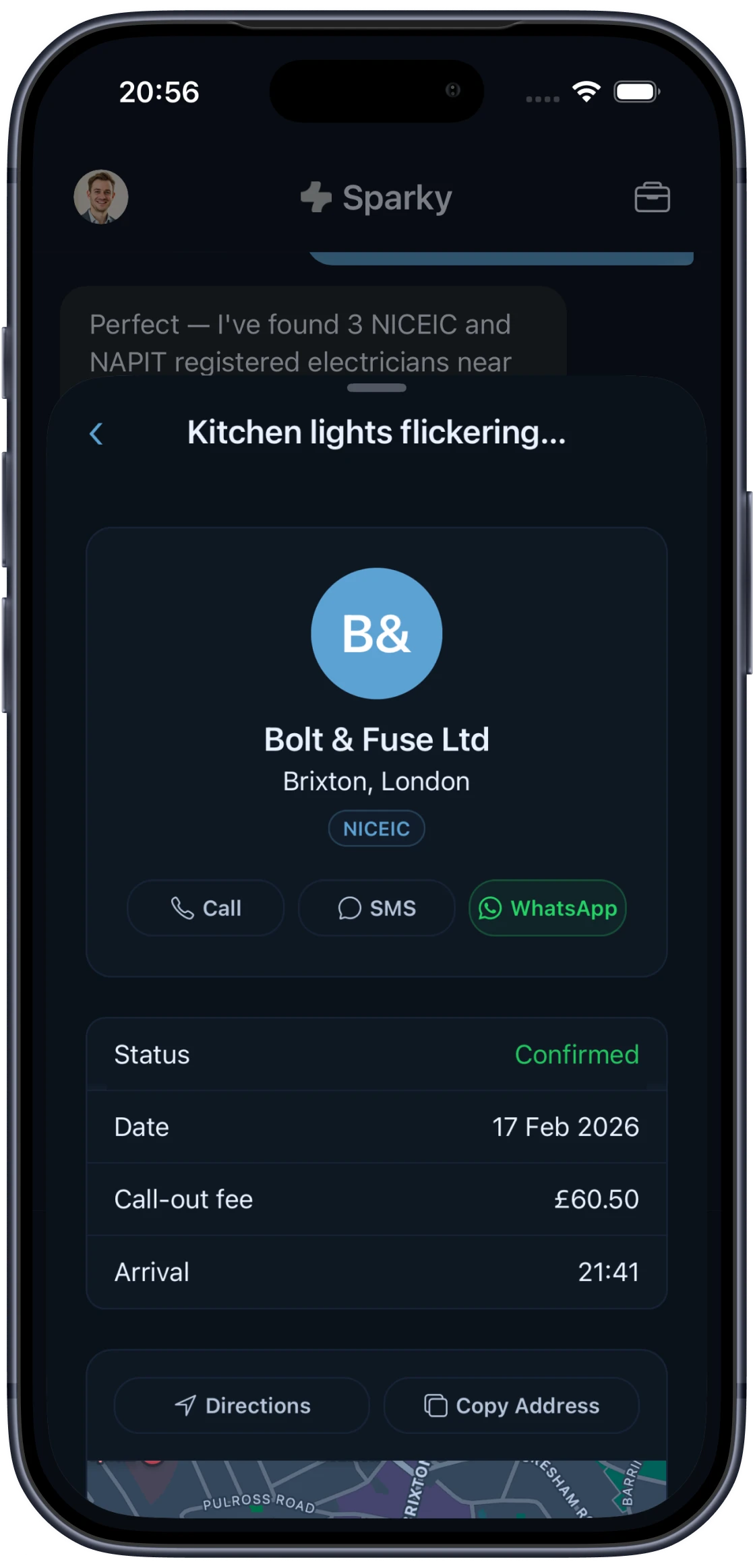
Platforms like Sparky allow letting agents to describe what they need and get matched with local registered electricians quickly. For portfolio management, this can streamline the booking process — particularly for geographically dispersed portfolios where a single preferred contractor may not cover all areas. The platform handles electrician verification, scheduling, and certificate delivery.
Audit Readiness
Audit readiness means being able to demonstrate full EICR compliance across your entire portfolio at a moment's notice. Local authorities can request EICR documentation without prior warning, and the Renters' Rights Act's Property Portal will make compliance status visible to regulators and tenants alike.
What auditors look for:
When a local authority conducts a compliance audit (either targeted at a specific property or as part of a wider area-based enforcement programme), they will ask for:
- The current EICR for the property in question, showing a Satisfactory result
- Evidence that the EICR was provided to the tenant within the required timeframe
- If the EICR was Unsatisfactory, evidence of completed remedial work and confirmation provided to the local authority within 28 days
- The electrician's competent person scheme registration details
You must be able to produce this documentation within 7 days of a local authority request. In practice, aim to produce it within 24 hours — delays suggest disorganisation and may prompt further scrutiny.
Building an audit-ready system:
- Digital document storage: Store all EICRs, remedial certificates, and tenant notification confirmations digitally, linked to the property record. Cloud storage ensures accessibility from any location and protects against physical document loss.
- Consistent naming convention: Use a standard file naming format — e.g., [Address]_EICR_[Date]_[Result].pdf — so that documents can be found quickly by anyone on the team.
- Compliance dashboard: Maintain a summary view showing portfolio-wide compliance status at a glance: how many properties are compliant, how many EICRs are due in the next 30/60/90 days, how many have outstanding remedial work, and how many are overdue. This dashboard should be reviewed weekly by the compliance manager or branch manager.
- Regular self-audits: Conduct quarterly internal audits of your compliance records. Select 10% of the portfolio at random and verify that the EICR is valid, the tenant notification is on record, and any remedial work has been completed. Address any gaps immediately.
Landlord reporting:
Provide each landlord with an annual compliance summary covering:
- Current EICR status and expiry date for each of their properties
- Any remedial work completed during the year, with costs
- EICRs due in the next 12 months, with estimated costs
- Any recommendations for proactive work (consumer unit upgrades, C3 observations to address)
This reporting demonstrates professionalism, keeps the landlord engaged in compliance, and pre-empts budget discussions about upcoming EICR costs. It also creates a documented record that the agent kept the landlord informed — valuable protection in the event of a dispute or negligence claim.
Preparing for the Property Portal:
The Renters' Rights Act introduces a Property Portal where landlords must register properties and demonstrate compliance. While the full specification is not yet published, letting agents should prepare by:
- Ensuring all compliance data is held digitally in a format that can be exported or uploaded
- Verifying that EICR dates, results, and electrician registration details are accurately recorded
- Establishing processes for updating the tracker immediately when a new EICR is issued
- Training staff on the importance of real-time compliance data maintenance
Agents who invest in audit-ready systems now will have a significant competitive advantage when the Property Portal launches — both in terms of operational efficiency and in demonstrating their compliance credentials to landlord clients.
Key Takeaways
- ✓Treat EICR compliance as a systematic business process with centralised tracking, automated alerts, and defined escalation workflows.
- ✓Set compliance alerts at 120, 90, 60, and 30 days before expiry — starting early gives time for booking, access issues, and potential remedial work.
- ✓Prioritise HMOs, older properties, and those with previous Unsatisfactory results — they carry the highest compliance risk.
- ✓Bulk booking by geographical area can reduce EICR costs by 15-30% and simplify scheduling for both your team and the electricians.
- ✓Conduct quarterly self-audits on 10% of the portfolio to catch compliance gaps before they become breaches.
- ✓Prepare for the Property Portal now by maintaining digital compliance records in a consistent, exportable format.