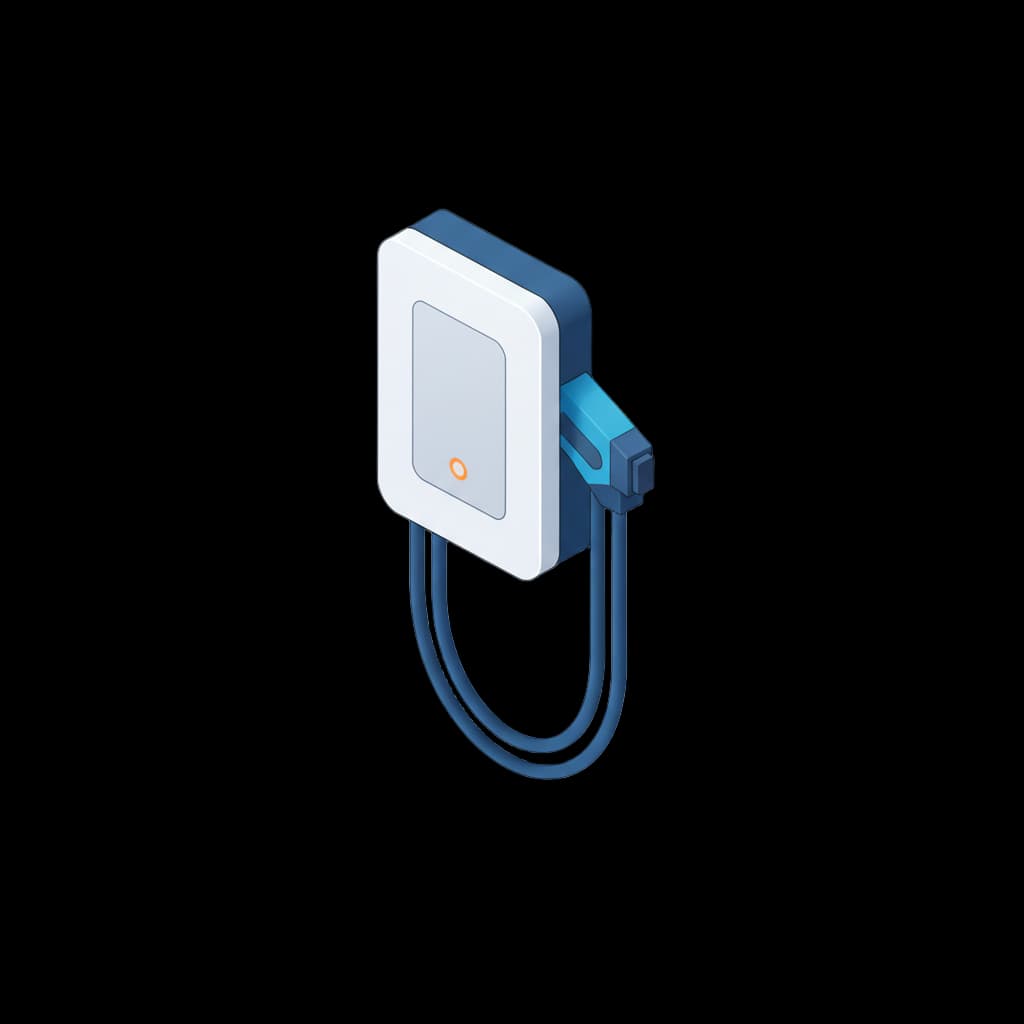
What is this?
A home EV charger (also called a wallbox or EVSE) that is not working means you cannot charge your electric vehicle at home. These units are typically hardwired to a dedicated circuit with their own MCB and RCD protection in the consumer unit. Common home charger brands in the UK include Ohme, Zappi, Pod Point, Easee, and Wallbox.
Common causes
- Tripped MCB or RCD on the dedicated EV charger circuit
- Wi-Fi or connectivity issue preventing the charger from authorising a session
- Scheduled charging active — charger is waiting for off-peak hours
- Charger in fault state requiring a restart or reset
- Power supply issue from the consumer unit to the charger
- Internal charger fault — relay, contactor, or control board failure
Is it dangerous?
An EV charger that will not start is not dangerous. However, if the charger tripped the RCD when it last attempted to charge, do not keep resetting it — there may be an earth fault that needs investigation. If you notice a burning smell or heat from the charger or its cable, isolate the circuit immediately.
Can I fix it myself?
Check the consumer unit for a tripped MCB or RCD on the EV circuit — it is usually a 32A MCB. Check the charger app for error messages or scheduled charging settings. Restart the charger by switching the isolator off for 30 seconds and back on. Check your Wi-Fi — many chargers need connectivity to authorise charging. Try a different charging cable if you use a Type 2 tethered lead.
When to call an electrician
Call an electrician if the charger's circuit keeps tripping, if the charger shows a persistent fault light after resetting, if the charger has no power at all, or if the unit was recently installed and has never worked correctly.
What will an electrician do?
Test the dedicated EV charger circuit at the consumer unit
Check the supply voltage and earth fault current
Test the charger's internal earth leakage protection
Inspect the wiring between the consumer unit and charger
Diagnose control board, relay, or contactor faults within the charger
Liaise with the charger manufacturer if a warranty replacement is needed
Typical cost
£80 – £300
Circuit and supply issues are at the lower end. Internal charger faults may be covered under warranty (most home chargers have a 3-year warranty). Out-of-warranty charger replacement is a separate cost.