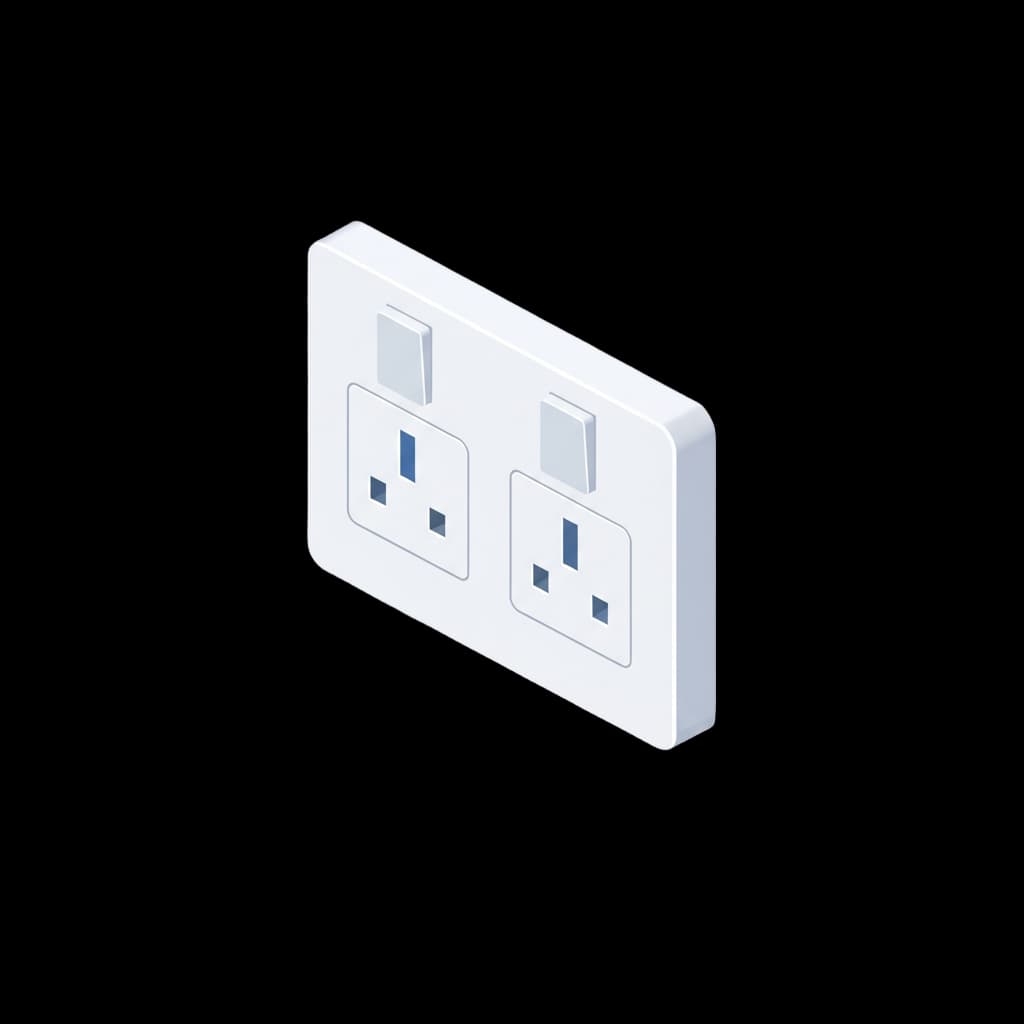
What is this?
When power is restored after a cut, most circuits come back automatically. If sockets remain dead after the supply is restored, it usually means the MCB or RCD protecting that circuit tripped during the outage (often from the power surge when supply returns) and has not been manually reset. In some cases, the power surge that accompanies restoration can damage sensitive protective devices or cause a pre-existing weak fault to fully develop.
Common causes
- MCB or RCD tripped during the power cut or during supply restoration
- Surge on restoration caused a pre-existing weak connection to fail
- Voltage spike damaged the MCB or RCD itself
- A faulty appliance that was on when power was restored caused the circuit to trip
- The power cut was caused by an internal fault that still exists
Is it dangerous?
Not immediately dangerous, but it should not be ignored. If the MCB or RCD has tripped, there may be a reason beyond the power cut — a fault that has worsened. Power surges during restoration can also affect other circuits, so check all sockets and appliances in the house.
Can I fix it myself?
Check your consumer unit. If an MCB or RCD is in the off or middle position, try resetting it. If it stays on, power should be restored. If it trips again, switch off all appliances on that circuit (unplug everything), try resetting, and then plug items back in one by one. If the MCB trips with nothing plugged in, there is a wiring fault.
When to call an electrician
Call an electrician if the MCB or RCD will not reset, if it trips repeatedly, or if sockets remain dead despite all circuit breakers appearing to be in the on position. Also call if you notice any appliances behaving strangely after the power cut — a surge may have caused damage.
What will an electrician do?
Check all protective devices in the consumer unit for damage
Test each circuit for faults that may have been caused or revealed by the power surge
Inspect connections for signs of arcing or overheating
Replace any damaged MCBs, RCDs, or surge-damaged components
Recommend a surge protection device (SPD) if not already fitted
Typical cost
£80 – £200
If the issue is a tripped MCB that will not reset due to a fault, standard fault-finding rates apply. Replacing a damaged MCB or RCD is additional.