What is this?
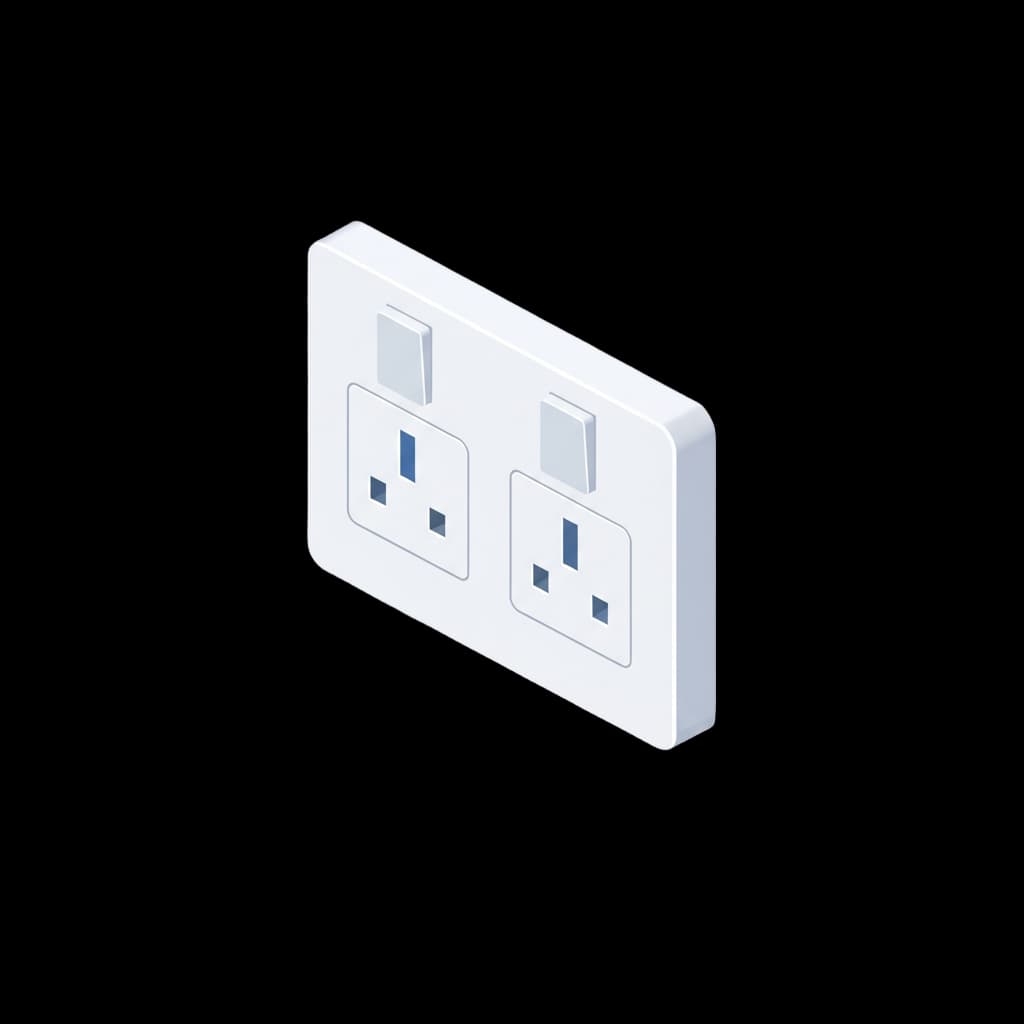
A dead plug socket means no power is reaching the outlet. In UK homes, most sockets are wired on a ring circuit — a loop of cable that starts and ends at the consumer unit. If a socket stops working, it could be a local fault at that socket, a break in the ring circuit, or the MCB protecting the circuit has tripped. A single dead socket is usually a localised issue, while multiple dead sockets suggest a circuit-level problem.
Common causes
- MCB protecting the socket circuit has tripped at the consumer unit
- Loose wire connection inside the socket
- Break in the ring circuit cable
- Faulty socket mechanism — the internal contacts have worn out
- Damaged cable behind the wall from drilling or nail penetration
Is it dangerous?
A dead socket is not immediately dangerous, but the cause may be. Loose connections inside sockets can cause arcing, which generates heat and is a fire risk. If the socket stopped working suddenly after a pop, spark, or burning smell, treat it as urgent.
Can I fix it myself?
First, check the obvious: try a different appliance in the socket to rule out the appliance being faulty. Check your consumer unit for a tripped MCB and try resetting it. If the MCB stays on but the socket is still dead, the fault is in the wiring. Do not remove the faceplate to investigate — wiring work should be done by a qualified electrician.
When to call an electrician
Call an electrician if the MCB trips again after resetting, if the socket is dead but the MCB has not tripped, if multiple sockets on the same circuit are dead, or if you noticed any burning smell, sparking, or discolouration before the socket stopped working.
What will an electrician do?
Test the socket with a socket tester to check for power, polarity, and earth
Remove the faceplate and inspect the wiring connections
Test the ring circuit continuity (R1, Rn, R2 tests) to check for breaks
Trace and repair any cable damage in the walls or under the floor
Replace the socket mechanism if the internal contacts are worn
Re-test the circuit after repair to confirm correct operation
Typical cost
£70 – £200
A simple loose connection repair is at the lower end. If the cable behind the wall is damaged and needs replacing, expect costs towards the higher end.