What is this?
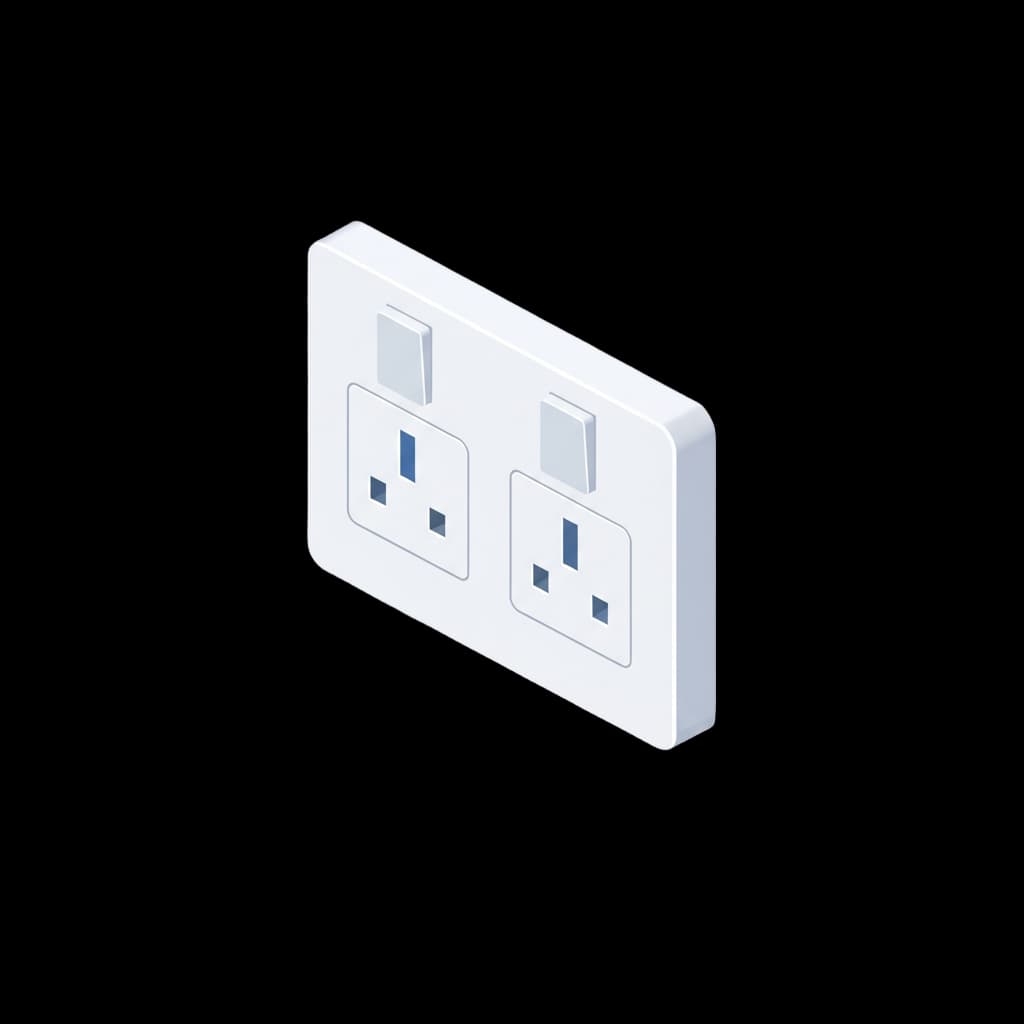
A double socket is a single unit containing two independent plug outlets wired to the same mains supply. Both sides share the same incoming cable and terminal connections, but each outlet has its own set of spring-loaded contacts that grip the plug pins and complete the circuit. When one side of a double socket stops working while the other side is fine, the fault is almost always inside the socket mechanism itself rather than in the house wiring. This is one of the most common socket problems in UK homes, particularly on sockets that get heavy daily use such as those in kitchens, living rooms, and bedside positions. The problem can appear suddenly — an appliance simply stops powering on — or develop gradually, with one side becoming intermittent before failing completely.
Common causes
- Worn or collapsed spring contacts on the faulty side — the spring clips that grip the plug pins weaken over years of use until they no longer make a reliable connection
- Loose terminal connection inside the socket — the internal bridge wire or connection between the two sides has worked loose, cutting supply to one half
- Back stab (push-fit) connections failing — some budget sockets use push-in wire connections rather than screw terminals, and these can work loose over time
- Burn damage or arcing on one set of contacts from a faulty appliance, an overloaded adapter, or a plug with loose pins
- Overheating from sustained high-load use — running a fan heater, iron, or kettle from the same side repeatedly can degrade the contacts on that side faster
- Manufacturing defect in one half of the socket mechanism — particularly common in very cheap unbranded sockets
- Debris, dust, or corrosion inside one set of plug pin receptacles preventing proper contact
Is it dangerous?
Using the working side of a double socket where the other side has failed is generally safe in the short term, but the socket should be replaced promptly. The concern is what caused the failure. If the contacts on the dead side are worn, they may still be making partial contact — enough to generate heat but not enough to power your appliance. This partial contact causes arcing and overheating inside the socket, which is a fire risk even when nothing is plugged into the dead side. If one side failed due to burn damage or overheating, the other side shares the same internal wiring and may be affected too. Look out for warning signs: if the working side feels warm to the touch, if the faceplate is discoloured around either set of plug holes, or if you notice a faint burning smell near the socket, stop using it entirely and call an electrician.
Can I fix it myself?
You cannot repair the internal mechanism of a double socket, and any work behind the faceplate — including replacing the socket — involves mains wiring at 230 volts. Under Part P of the Building Regulations, electrical work in your home must be carried out safely and should comply with BS 7671. While a like-for-like socket replacement is not notifiable work, it still requires competence with mains wiring. If you are not confident working with mains electricity, call an electrician. Before calling, there are a few safe checks you can do: test the dead side with a different appliance to confirm it is the socket and not the appliance at fault, try the original appliance in the working side or another socket, and check your consumer unit for a tripped MCB (though this would typically affect both sides). If the dead side works intermittently — sometimes powering devices and sometimes not — this actually confirms a contact problem and the socket definitely needs replacing.
When to call an electrician
Call an electrician to replace the socket. This is typically a quick and inexpensive job. However, treat it as more urgent if you notice any of these signs: brown or dark marks around the plug holes on either side, the faceplate feels warm to the touch even when nothing is plugged in, there is a burning or hot plastic smell near the socket, the socket has been sparking when you insert or remove plugs, or the dead side works intermittently (flickering or cutting in and out). These signs suggest internal arcing or overheating that could develop into a fire if left.
What will an electrician do?
Isolate the circuit at the consumer unit and confirm it is dead with a voltage tester
Remove the faceplate and inspect the wiring connections and back box
Check for signs of overheating, arcing, or burn damage on the wires and terminals
Inspect the cable insulation for heat degradation — damaged insulation may need replacing
Fit a new double socket with secure screw-terminal connections (not push-fit)
Test both sides with a socket tester for correct polarity, earth continuity, and operation
Check other sockets on the same ring circuit if the fault suggests a wider issue
Typical cost
£60 – £120
A double socket replacement is a straightforward job taking 20-40 minutes. The socket itself costs £5-£15 (standard white) or £15-£30 (brushed steel or branded). If the electrician finds heat-damaged wiring behind the socket, additional repair work may push the cost towards £150-£200. Most electricians charge a minimum fee of £40-£80 which covers the first hour of work.
How to diagnose which side is faulty
Before calling an electrician, run through these quick checks to confirm the problem is with the socket and not your appliance or plug. These steps are all safe to do without touching any wiring.
Plug a device you know works (such as a phone charger or lamp) into the dead side. If it does not power on, the socket side is confirmed faulty.
Try the same device in the working side of the same double socket. If it works there, you have ruled out the device being at fault.
Try a different device in the dead side as a second confirmation — some devices draw very little current and may not properly test the contacts.
Check your consumer unit for a tripped MCB. A tripped breaker would usually affect both sides, but it is worth checking as part of your diagnosis.
Check other sockets on the same circuit. If multiple sockets have issues, the problem may be a ring circuit fault rather than a single socket failure.
If the dead side works intermittently — powering on sometimes but not others, or cutting out when the plug is moved — this confirms worn contacts and the socket needs replacing.
Is it safe to keep using the working side?
In most cases, yes — you can continue using the working side of the double socket while you arrange a replacement. The working side has its own independent contacts and will continue to function normally. However, both sides share the same incoming wiring and terminal connections, so there are situations where you should stop using the socket entirely.
Stop using the socket immediately if: the faceplate is warm to the touch, there are brown or dark marks around either set of plug holes, you can smell burning or hot plastic, the working side has started sparking or feels loose when you insert a plug, or the dead side failed with a pop, flash, or visible spark. Any of these signs suggest internal damage that could affect the entire socket unit.
Can I replace a double socket myself?
Replacing a double socket with a like-for-like replacement is not classified as notifiable work under Part P of the Building Regulations, which means you do not need to inform Building Control. However, the work must still comply with BS 7671 (the IET Wiring Regulations), and you are working with 230-volt mains wiring — a mistake can be fatal.
If you are not experienced with electrical work, this is a job for a qualified electrician. The cost of a professional socket replacement (typically £60-£100 including the socket) is small compared to the risk of an incorrect connection causing a fire or electric shock. An electrician will also spot any underlying issues such as heat-damaged wiring that a DIY replacement would miss.
Why do double sockets fail on one side?
Double sockets fail asymmetrically because each side has independent contact mechanisms that wear at different rates. The side you use more often will naturally wear faster. In most homes, people habitually use the same side of a double socket — often the one that is easier to reach or closer to the appliance. Over years, this repeated insertion and removal of plugs gradually weakens the spring clips on that side.
Budget sockets are more prone to one-sided failure because they use thinner, softer metal for the contact springs. Quality sockets from manufacturers like MK, BG Nexus, or Crabtree use heavier-gauge contacts that maintain their spring tension for much longer. If you are replacing a failed socket, it is worth spending a few pounds more on a reputable brand — especially for sockets that see heavy daily use.