What is this?
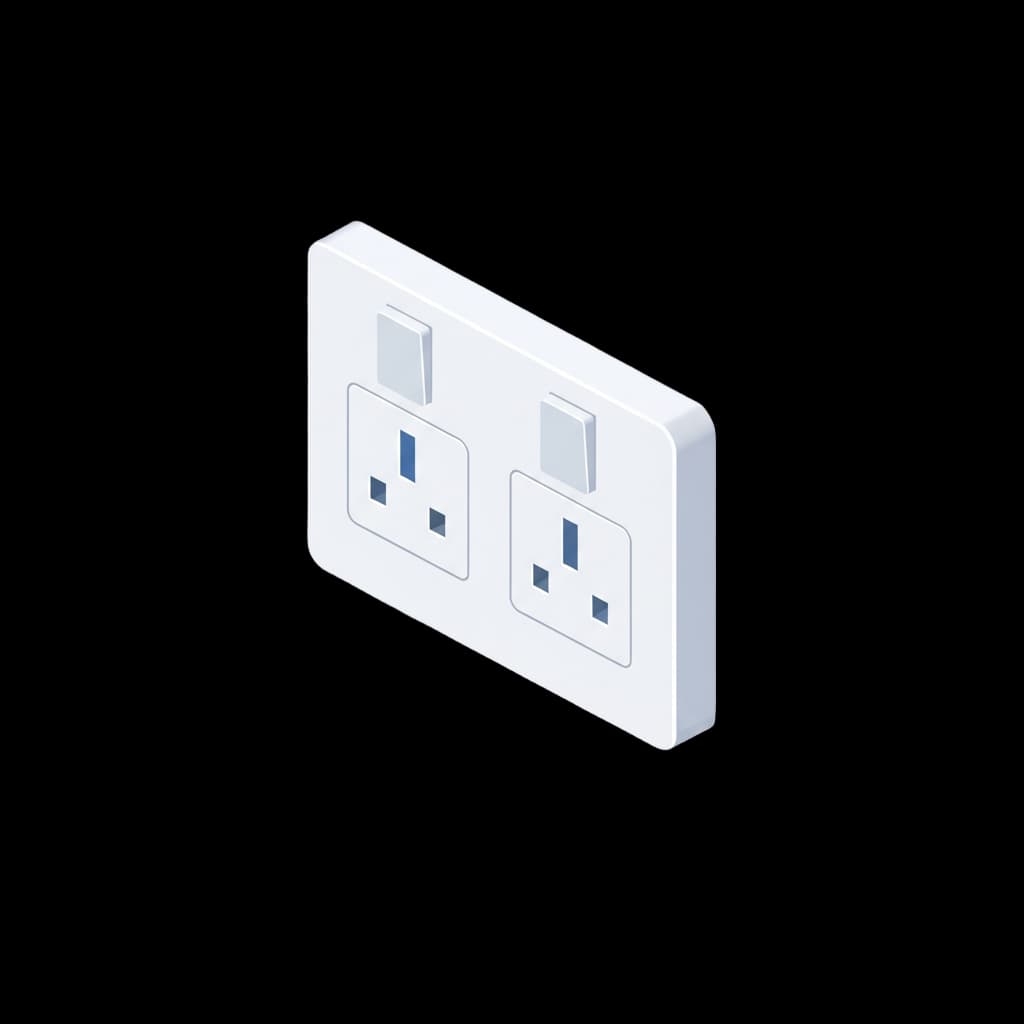
A cracked or damaged socket faceplate is a serious safety issue. The plastic faceplate is a critical insulating barrier between you and the live wiring inside. If it is cracked, broken, or has pieces missing, there is a risk of direct contact with live terminals carrying 230 volts. UK sockets also have internal shutters that prevent access to live and neutral contacts — if the socket is damaged, these shutters may not function correctly.
Common causes
- Impact damage from furniture, vacuum cleaners, or heavy objects
- Overheating from loose connections causing the plastic to melt or deform
- Age and UV degradation making the plastic brittle
- Excessive force when inserting or removing plugs
- Poor quality socket that has deteriorated prematurely
Is it dangerous?
Yes, this is dangerous. A cracked socket can expose live terminals carrying 230 volts. Even a hairline crack can admit moisture, dust, or allow a finger or object to contact live parts. If the crack shows any internal wiring or the shutters are not functioning, there is a direct risk of electric shock. Children are particularly at risk as sockets are often at their eye level.
Can I fix it myself?
Do not use the socket. Turn off the circuit at the consumer unit and tape over the socket so nobody uses it. Do not attempt to repair a cracked socket with glue or tape — it must be replaced entirely. While a competent DIYer can replace a faceplate, if there is any sign of overheating, melting, or damaged wiring behind the socket, call an electrician.
When to call an electrician
Call an electrician if the damage shows signs of overheating (discolouration, melting, burning smell), if the wiring behind the socket is visible, if you are not confident replacing the socket yourself, or if the damage was caused by a spark, flash, or trip.
What will an electrician do?
Isolate the circuit and remove the damaged socket
Inspect the wiring and back box for heat damage or deterioration
Check the connections are tight and the cable insulation is intact
Fit a new socket of the correct type and rating
Test the new socket for correct polarity, earth continuity, and operation
Typical cost
£60 – £130
A straightforward socket replacement is quick and inexpensive. If the wiring behind has heat damage and needs replacing, costs will be higher.