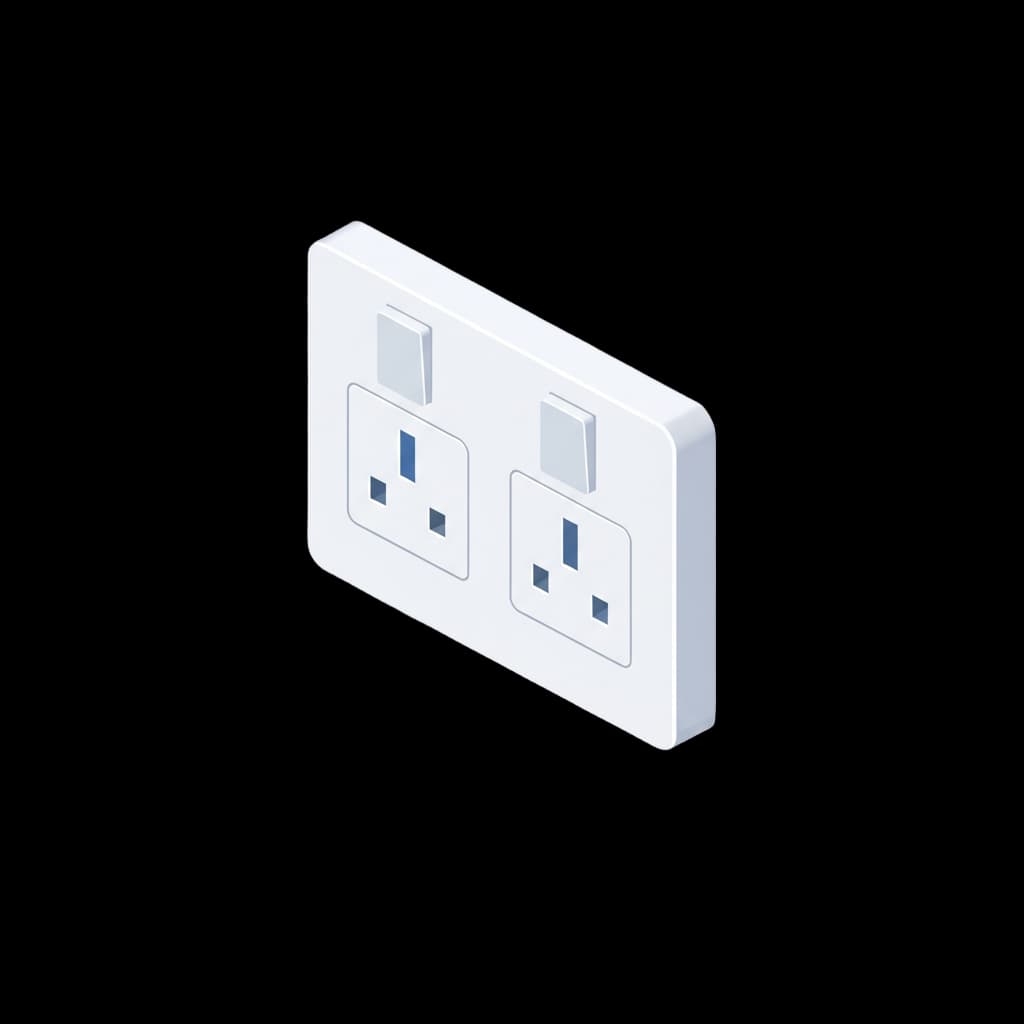
What is this?
Socket faceplate discolouration can have two very different causes with very different severity levels. Uniform yellowing across the entire faceplate is usually harmless UV degradation — white plastic naturally yellows over time with exposure to sunlight. However, localised brown or dark marks around the plug holes, or discolouration concentrated on one area, can indicate overheating from loose connections or overloaded contacts. This type of discolouration is a warning sign of a potential fire hazard.
Common causes
- UV degradation causing uniform yellowing of the plastic over years
- Overheating from loose internal connections causing localised browning
- Overloaded socket drawing excessive current through worn contacts
- Arcing at the plug-to-socket contact points
- A faulty plug with loose pins causing heat build-up
Is it dangerous?
Uniform yellowing from UV exposure is purely cosmetic and not dangerous. However, brown marks, melting, or discolouration around the plug holes indicates overheating and is a fire risk. If you can smell burning, see melted plastic, or the socket feels warm when nothing is plugged in, treat this as urgent.
Can I fix it myself?
Assess the type of discolouration. If the entire faceplate is evenly yellow and feels normal, it is likely just UV ageing and not a safety concern. If there are brown marks around the plug holes, dark spots, signs of melting, or the faceplate feels warm, stop using the socket and call an electrician. Do not ignore localised discolouration.
When to call an electrician
Call an electrician if you see brown or dark marks around the plug holes, if the faceplate has any melted areas, if the socket feels warm to the touch, or if there is a burning smell. These indicate overheating that could lead to a fire. An electrician should also be called if you simply want old yellowed sockets replaced for cosmetic reasons.
What will an electrician do?
Remove the faceplate and inspect the wiring and back box for heat damage
Check all connections for tightness — loose terminals are the main cause of overheating
Inspect the socket contacts for signs of arcing or burning
Replace the socket and any damaged wiring
Check other sockets on the circuit for similar issues
Advise on load distribution if the socket was overloaded
Typical cost
£60 – £160
Socket replacement is straightforward. If the wiring behind has heat damage, additional repair work will increase the cost.