What is this?
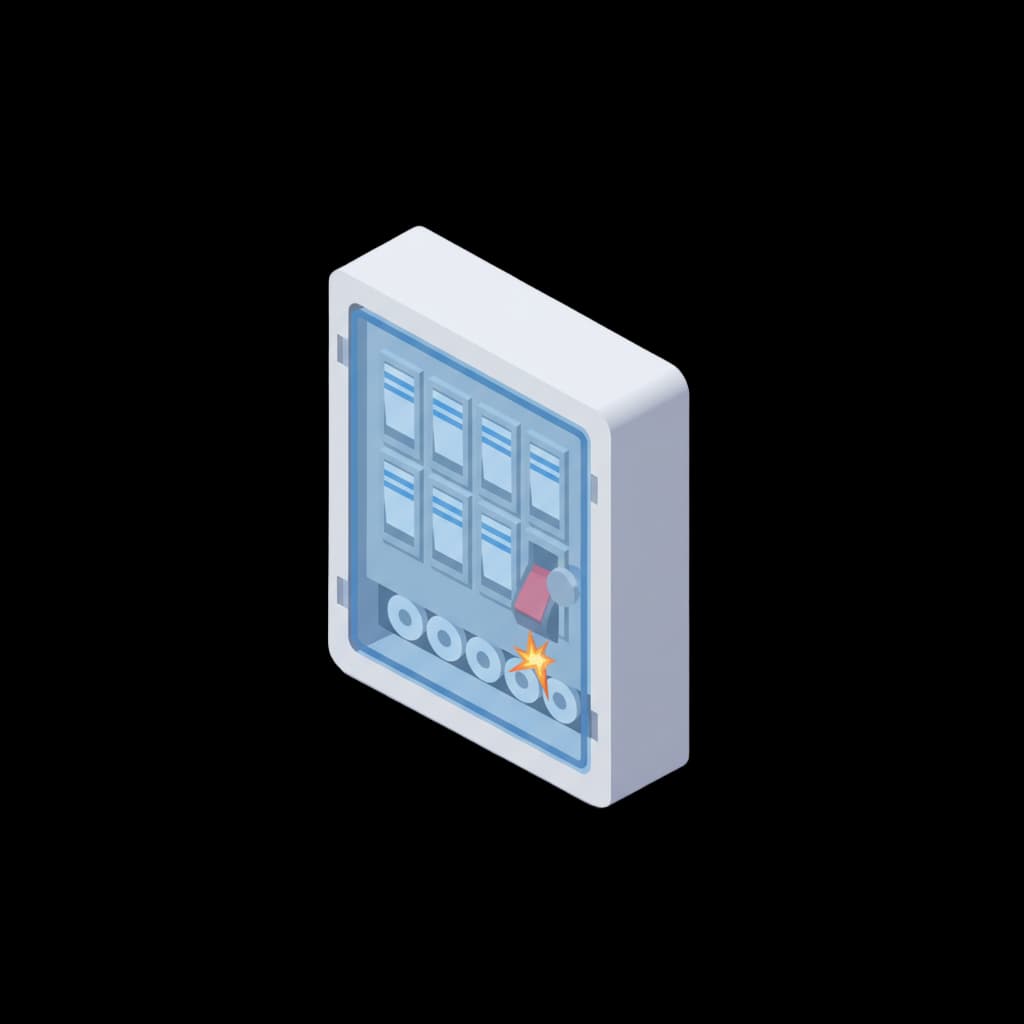
A circuit breaker (MCB — Miniature Circuit Breaker) protects an individual circuit against overload and short circuit. When it trips, it disconnects the power to that specific circuit. If it keeps tripping, there is either a fault on the circuit or the circuit is being asked to carry more current than it is rated for.
Common causes
- Overloaded circuit with too many appliances drawing power simultaneously
- Short circuit caused by damaged cable insulation or a faulty connection
- Faulty appliance with an internal short circuit
- Loose connection at a socket, junction box, or the MCB itself causing arcing
- Incorrect MCB rating for the circuit (too low after a circuit modification)
- Deteriorating cable insulation in older wiring
Is it dangerous?
A tripping MCB is doing its job and protecting you from a potentially dangerous situation. The fault it is protecting against — whether overload or short circuit — could cause a fire if the protection were not there. Do not replace an MCB with a higher-rated one to stop it tripping, as this removes the protection and could allow cables to overheat.
Can I fix it myself?
Identify which MCB has tripped by checking your consumer unit. Reset it. If it trips immediately, there is likely a short circuit. If it stays on for a while then trips, the circuit may be overloaded. Unplug appliances on that circuit and try resetting. Plug items back in one at a time. If it trips with nothing plugged in, the fault is in the fixed wiring.
When to call an electrician
Call an electrician if the MCB trips with nothing plugged in, if it trips immediately on reset, if you cannot identify the cause, or if you notice any burning smell or heat from the consumer unit. Never replace an MCB with a higher-rated one yourself — this is dangerous and against BS 7671.
What will an electrician do?
Test the circuit for short circuits and earth faults using insulation resistance testing
Check the loading on the circuit to determine if it is overloaded
Inspect all connections on the circuit for looseness or signs of overheating
Test the MCB itself to confirm it is functioning within specification
Repair the fault — whether a loose connection, damaged cable, or faulty appliance connection
Advise on circuit redistribution if the circuit is genuinely overloaded
Typical cost
£80 – £200
Straightforward fault-finding and repair. If the circuit needs splitting or redistributing to manage the load, costs will be higher.