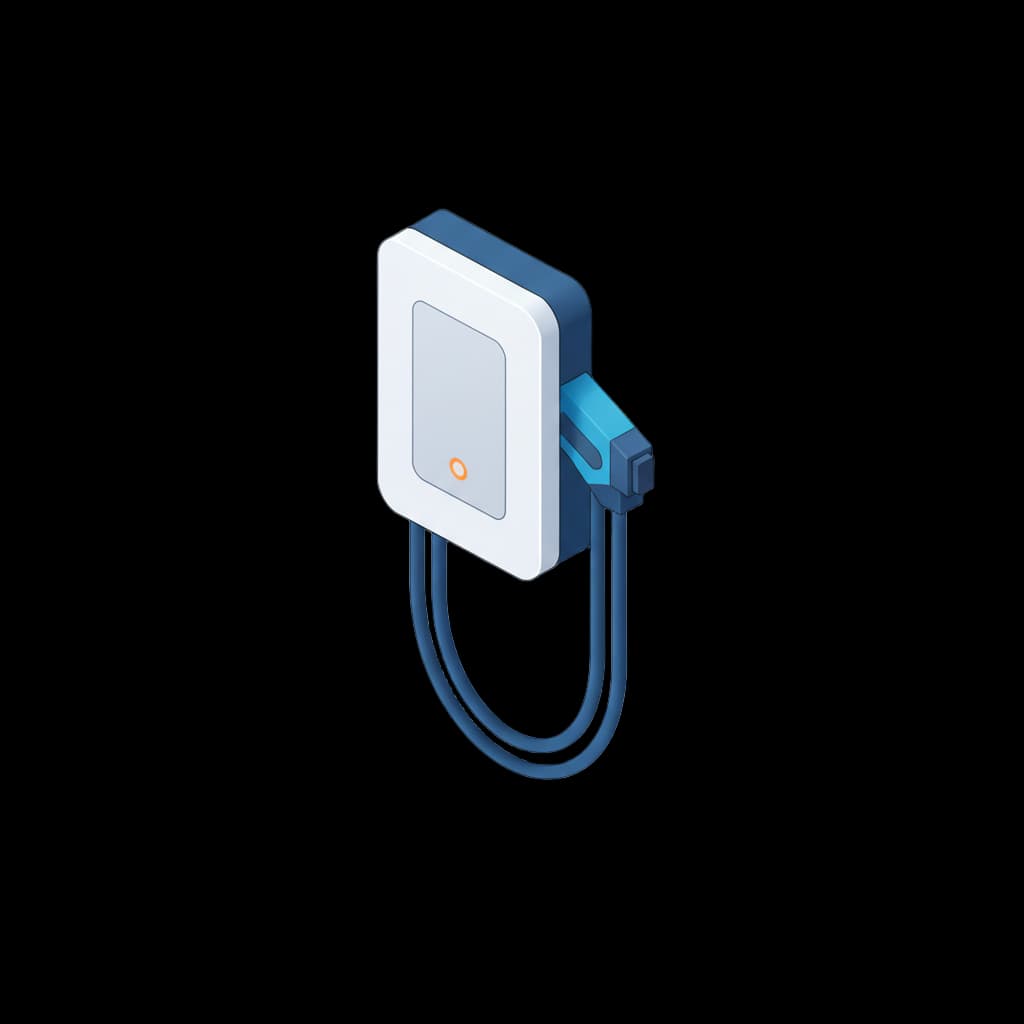
What is this?
A home EV charger that charges slower than expected may be operating at reduced power, being limited by the vehicle, or experiencing a supply issue. Most UK home chargers supply 7.2kW (32A single phase), which should add about 25-30 miles of range per hour. If charging is significantly slower, something is wrong.
Common causes
- Charger has reduced power due to load management or supply limitations
- Vehicle's onboard charger limiting the charge rate
- Low supply voltage to the charger
- Charger operating in a reduced-power fault mode
- Smart charging schedule limiting charge speed during peak hours
- Charging cable rated lower than the charger output
Is it dangerous?
Slow charging is not a safety issue. However, if the slow charging is caused by low supply voltage, this could affect other appliances in your home. If other appliances are also performing poorly (dim lights, slow appliances), the supply voltage should be checked.
Can I fix it myself?
Check the charger app for any power reduction settings, smart charging schedules, or load management features. Some chargers reduce power during peak hours or when other household loads are high. Check that you are using the correct charging cable — a 16A cable on a 32A charger will limit the charge rate. Check the vehicle settings for any charge rate limits set in the car's software.
When to call an electrician
Call an electrician if the charger is supposed to deliver 7.2kW but consistently charges much slower, if you suspect a supply voltage issue, if the charger was always slow since installation, or if the charge rate dropped suddenly compared to previous performance.
What will an electrician do?
Measure the supply voltage and current at the charger during a charge session
Check the charger settings and power output configuration
Verify the cable sizing from the consumer unit to the charger is adequate
Test for voltage drop across the circuit under load
Adjust charger power settings if configured incorrectly
Liaise with the DNO if the incoming supply voltage is consistently low
Typical cost
£80 – £250
Configuration and supply checks are at the lower end. If cable upgrades are needed because the original installation used undersized cable, costs will be higher.