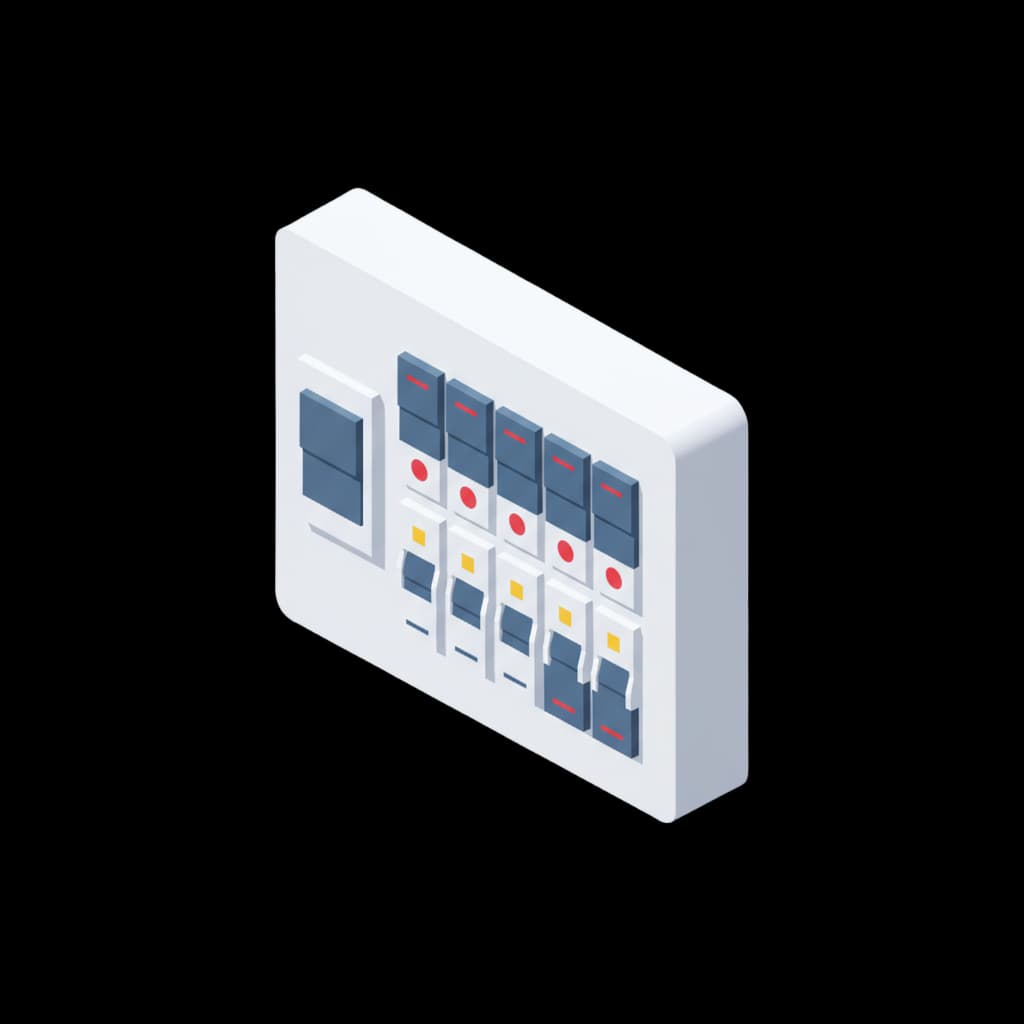
What is this?
Since January 2016, Amendment 3 to BS 7671 has required all new domestic consumer units to be made of non-combustible material — effectively meaning metal enclosures (steel). If you have an older plastic consumer unit, it does not automatically need replacing, but it does not meet current installation standards. Confusingly, some older metal fuse boxes are also not compliant because they lack modern protection devices. The key question is not just the material, but whether the unit has RCD protection and MCBs.
Common causes
- Consumer unit installed before 2016 using a plastic enclosure
- Very old metal fuse box from the 1970s–1980s with rewirable fuses
- Metal enclosure present but internal components are outdated
- Board was replaced after 2016 but the installer used a non-compliant plastic unit
- Consumer unit was installed correctly at the time but regulations have since changed
Is it dangerous?
A plastic consumer unit is not inherently dangerous in daily use, but in the event of an internal fault causing a fire, a metal enclosure contains the flames whereas plastic can melt and allow fire to spread. Old metal fuse boxes with rewirable fuses lack RCD protection, which is a more immediate safety concern than the enclosure material. The combination of old metal box with rewirable fuses and no RCDs is the most concerning scenario.
Can I fix it myself?
No. Any work on the consumer unit must be carried out by a qualified electrician. You can, however, check whether your board is metal or plastic, whether it has RCD test buttons, and whether it has MCBs (switches) or rewirable fuses.
When to call an electrician
Contact an electrician if your consumer unit has rewirable fuses regardless of the enclosure material, if it lacks RCD protection, or if you are having an EICR and want to discuss upgrade options. A consumer unit upgrade to a metal board with RCDs is one of the best safety investments you can make.
What will an electrician do?
Assess the existing consumer unit for compliance with current regulations
Advise on whether an upgrade is necessary or recommended
If upgrading, remove the old board and fit a new metal consumer unit to 18th Edition standards
Install appropriate RCD or RCBO protection on all circuits
Test and certify the installation
Typical cost
£350 – £650
Full consumer unit upgrade to a metal board with testing and certification. This is the same as any consumer unit replacement.