What is this?
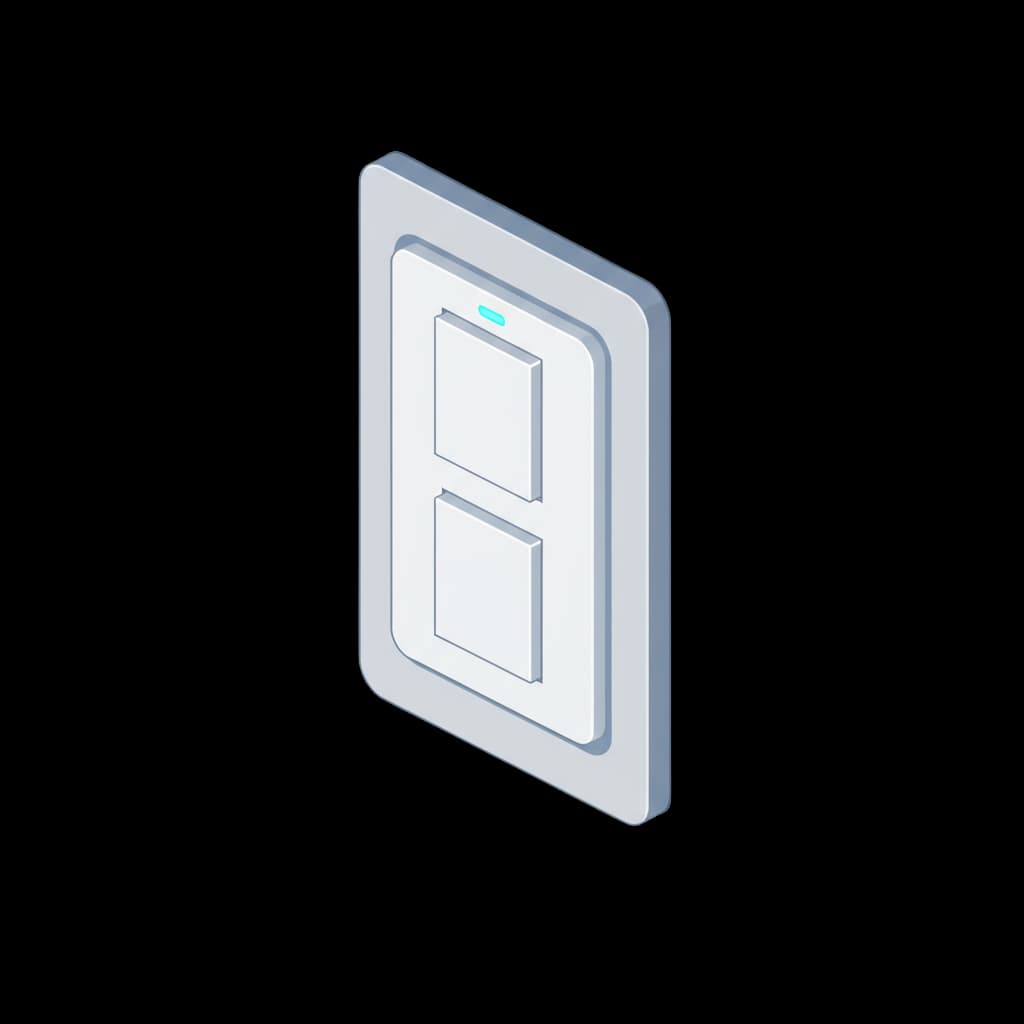
A light that will not turn off means the switch is no longer breaking the circuit. The live wire is permanently connected to the light, keeping it energised regardless of the switch position. This can happen when the switch contacts have welded together due to arcing, when the wiring has been incorrectly connected (perhaps after a recent change), or when a faulty dimmer module is failing in the 'on' state. It is the opposite of a dead switch — the circuit is permanently made rather than permanently broken.
Common causes
- Switch contacts have welded or fused together from arcing
- Incorrect wiring — live wire connected permanently, bypassing the switch
- Faulty dimmer module stuck in the on position
- Two-way switching wired incorrectly after a switch replacement
- Smart switch or relay stuck in the closed (on) position
Is it dangerous?
This is a moderate concern. While the light working continuously is not immediately dangerous, the underlying cause (welded contacts, incorrect wiring) can be. A switch with welded contacts has experienced significant arcing and overheating. Additionally, some light fittings are not designed for continuous operation and can overheat, particularly older fittings with incandescent bulbs.
Can I fix it myself?
You can turn the light off by switching off the lighting MCB at the consumer unit. This confirms the circuit is live and the problem is at the switch. Do not dismantle the switch — if the contacts have welded, you could receive a shock. LED bulbs run cool so there is no immediate fire risk from the light being on, but incandescent or halogen bulbs can overheat in enclosed fittings if left on indefinitely.
When to call an electrician
Call an electrician to diagnose and fix the fault. If the light is controlled by a two-way switch (operated from two locations), the wiring is more complex and should only be worked on by a professional. If the light is in a recessed or enclosed fitting with a non-LED bulb, turn it off at the consumer unit to prevent overheating until the electrician arrives.
What will an electrician do?
Isolate the circuit and test the switch mechanism
Determine if the switch contacts have welded or if the wiring is incorrect
Replace the switch and check the wiring connections
Re-test the two-way switching arrangement if applicable
Check the light fitting for any heat damage from prolonged operation
Typical cost
£60 – £150
A switch replacement is a quick job. If the two-way wiring needs correcting or a dimmer module needs replacing, costs are slightly higher.