What is this?
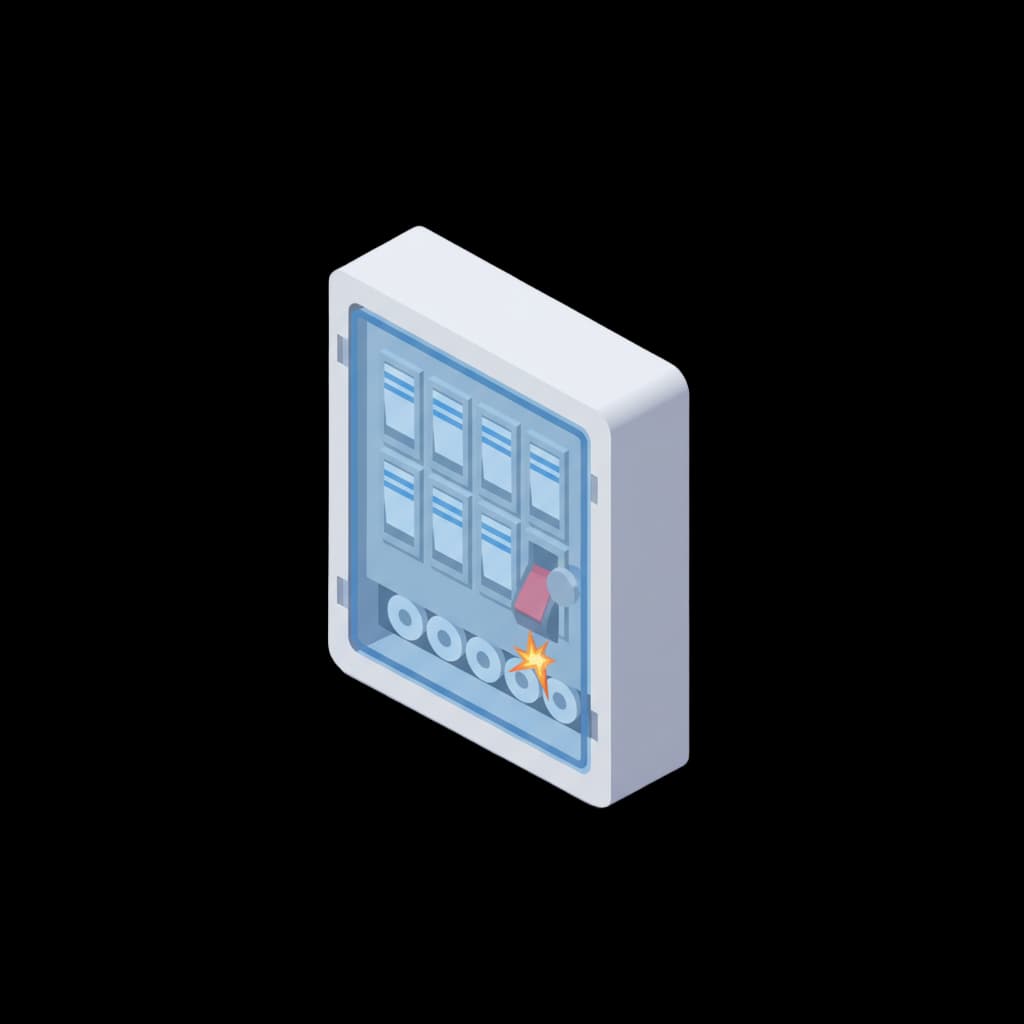
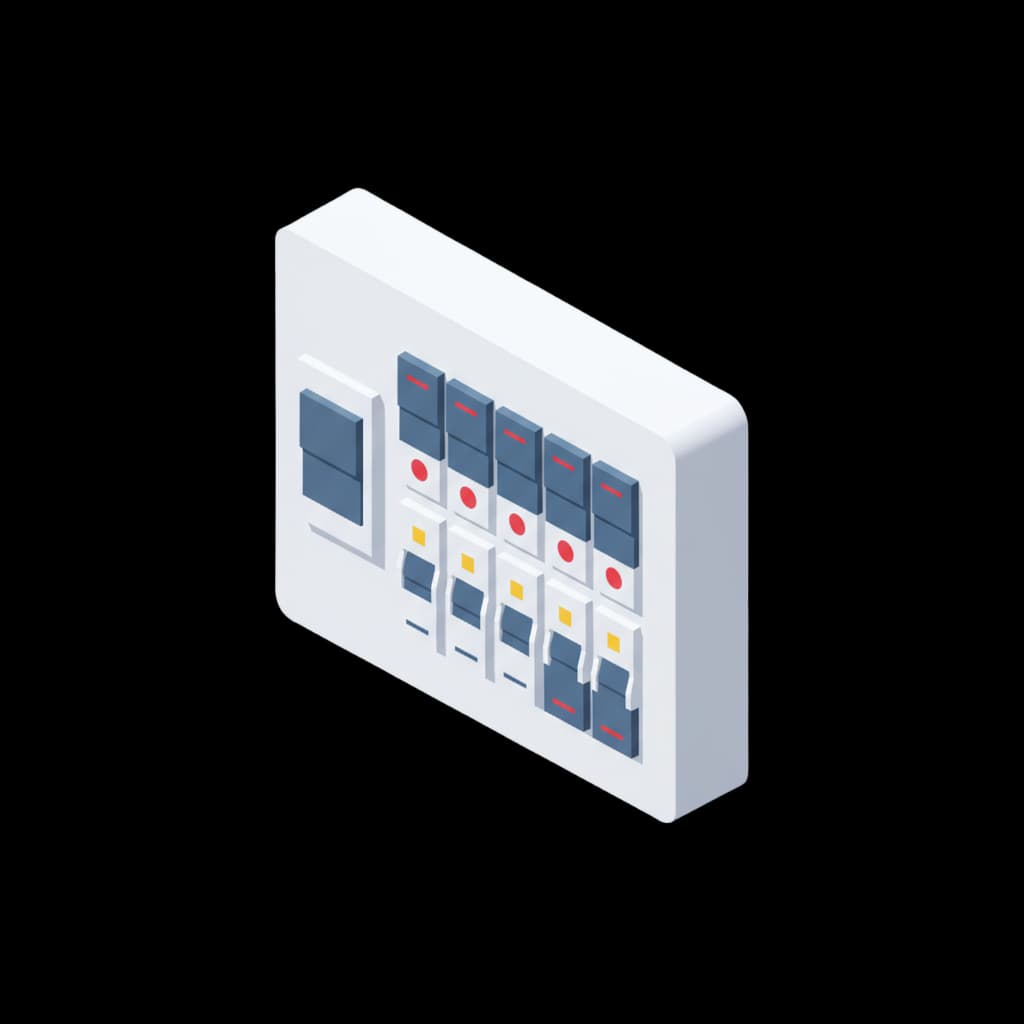
When roughly half your home loses power, it often means one of the RCDs in a split-load consumer unit has tripped. Modern UK consumer units typically split circuits across two RCDs, so if one trips, approximately half the house loses power.
Common causes
- One of two RCDs in a split-load consumer unit has tripped
- Multiple MCBs have tripped on the same side of the board
- Loose neutral connection on the main busbar
- A fault on one circuit causing the RCD to trip and affect all circuits on that side
- Water ingress affecting multiple circuits
Is it dangerous?
This indicates a potential fault that needs investigation. While not an immediate emergency, the underlying cause could be a serious wiring fault, especially if the RCD will not reset. If you notice burning smells or the problem recurs frequently, treat it as urgent.
Can I fix it myself?
Open your consumer unit cover and look for a tripped RCD — a larger switch usually positioned at the top or side. Try resetting it once. If it trips again, switch off all the MCBs on that side, reset the RCD, then switch MCBs back on one at a time. The MCB that causes the RCD to trip again identifies the faulty circuit.
When to call an electrician
Call an electrician if the RCD will not reset, if you cannot identify the faulty circuit, or if this happens repeatedly. An electrician should also be called if your consumer unit does not have RCD protection, as this may indicate it needs upgrading.
What will an electrician do?
Test the RCD to ensure it is functioning correctly
Isolate and test each circuit to find the fault
Perform insulation resistance tests on the faulty circuit
Repair the underlying fault — loose connection, damaged cable, or faulty appliance
Recommend a consumer unit upgrade if the board is outdated
Typical cost
£80 – £250
Fault-finding and repair on a single circuit is at the lower end. If the consumer unit needs replacing, expect £350–£600.