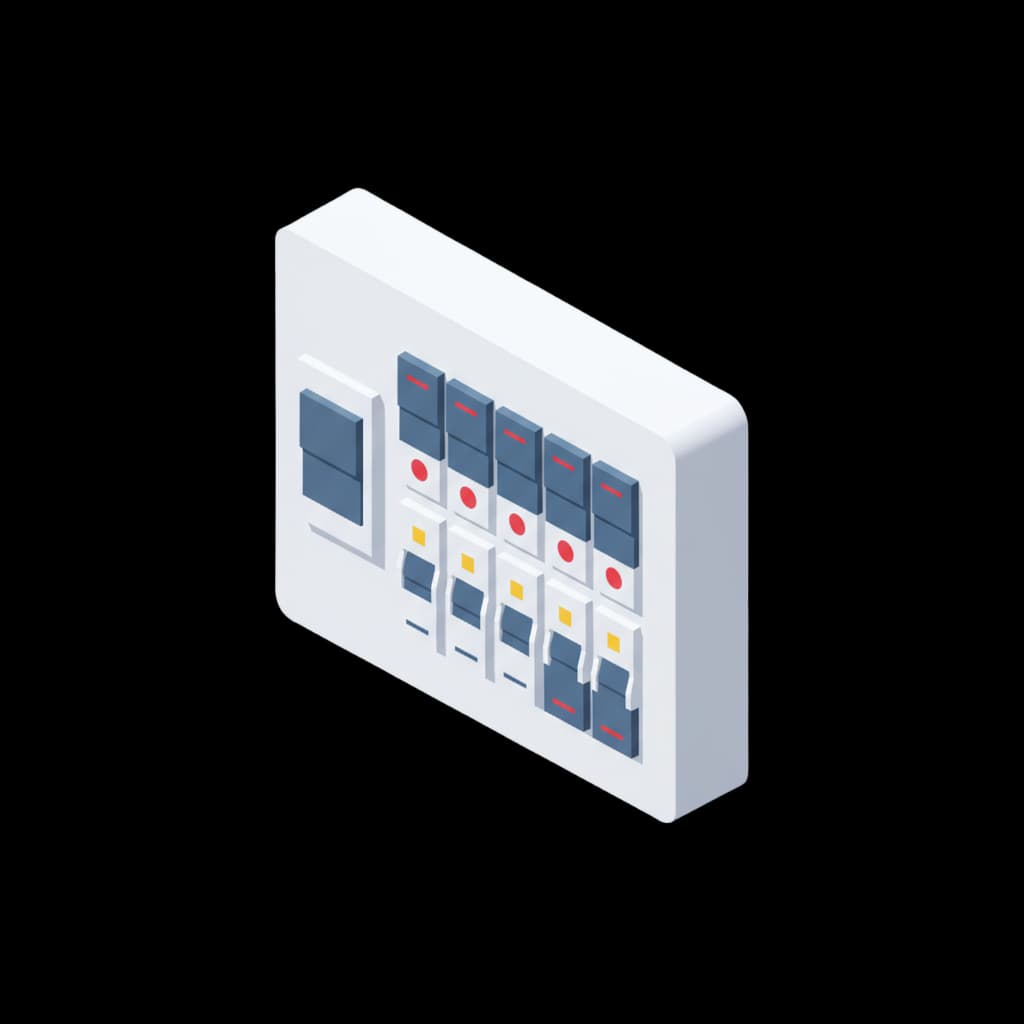
What is this?
Having a consumer unit in a bathroom is extremely unusual and almost certainly does not comply with BS 7671 wiring regulations. Bathrooms are classified as special locations due to the presence of water, and electrical installations in bathrooms must follow strict zoning rules. A consumer unit in a bathroom would be exposed to moisture and humidity, increasing the risk of electrical failure and electric shock. This arrangement was occasionally found in older conversions, bedsits, and HMOs.
Common causes
- Property was converted into flats and the only available space was in the bathroom
- Old bedsit or HMO layout where meter and board were squeezed into available space
- Poor-quality conversion work that did not comply with regulations
- Building layout was changed after the consumer unit was installed
- Bathroom was extended into the area where the consumer unit was originally located
Is it dangerous?
Yes, this is dangerous. Water and electricity are a lethal combination. A consumer unit in a bathroom is exposed to steam, moisture, splashes, and humidity, all of which can cause corrosion, tracking, and electrical failure. The risk of electric shock when operating the board is significantly higher in a wet environment. This arrangement should be remedied as a priority.
Can I fix it myself?
No. Relocating a consumer unit is major electrical work that must be carried out by a qualified electrician. It involves working with the incoming supply, which requires coordination with the DNO. Do not attempt to weatherproof or enclose a bathroom-located consumer unit as a workaround.
When to call an electrician
Call an electrician as soon as possible if your consumer unit is in a bathroom. This is a non-compliant and dangerous arrangement that needs to be resolved. The electrician will advise on relocating the board to a suitable location.
What will an electrician do?
Assess the current location and plan a new, compliant position for the consumer unit
Coordinate with the DNO if the meter tails need extending
Relocate the consumer unit to an appropriate location (typically a hallway or cupboard)
Extend or reroute cables as necessary
Test the entire installation and issue an Electrical Installation Certificate
Notify Building Control of the change
Typical cost
£500 – £1200
Relocating a consumer unit is more involved than a straight replacement. Costs depend on the distance of the move and how many cables need extending. DNO involvement for meter tail extensions adds to the cost.