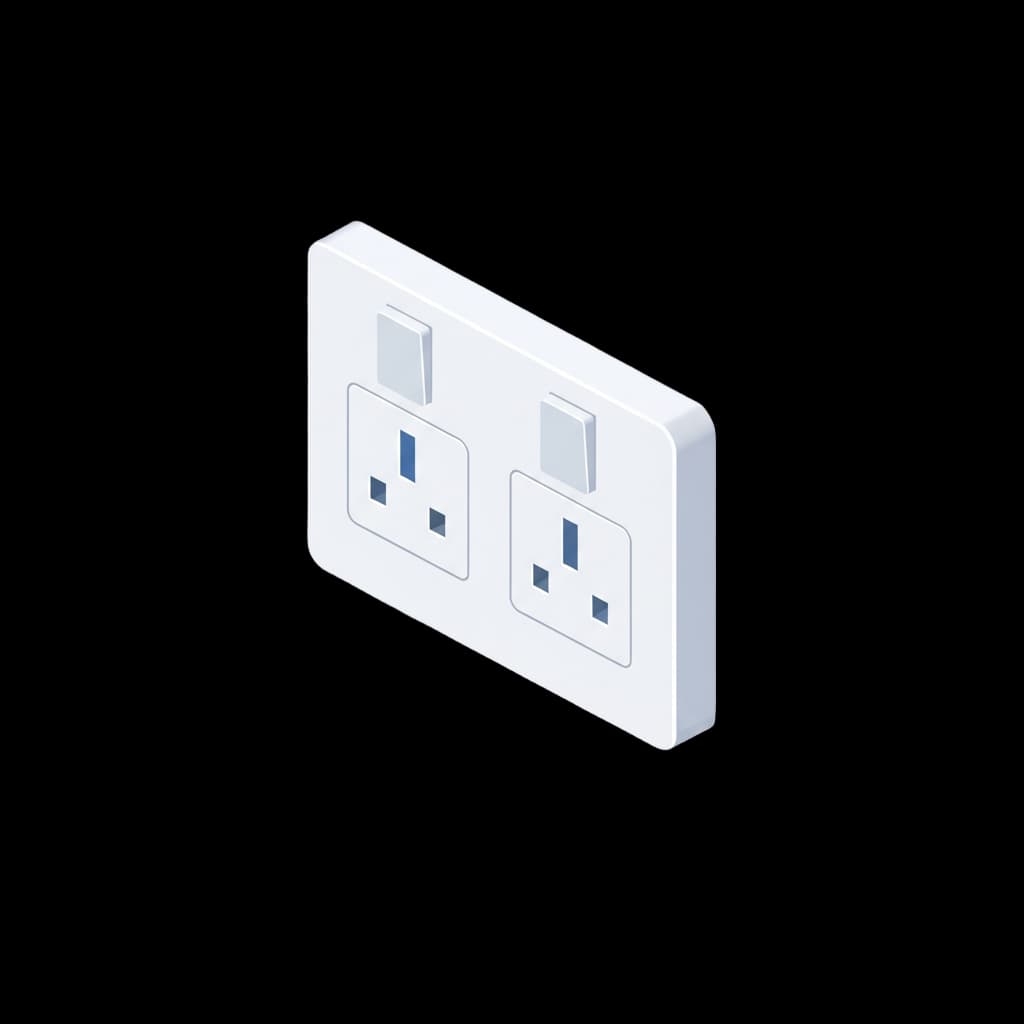
What is this?
Many modern UK sockets come with built-in USB-A or USB-C charging ports. These are powered by a small internal converter that steps the 230V mains down to 5V DC. When the USB ports stop working but the main sockets still function, the internal USB converter has usually failed. These converters have a limited lifespan and can fail due to heat, power surges, or component degradation. The main socket outlets are on a separate internal circuit and continue to work independently.
Common causes
- Internal USB converter module has failed due to age or heat
- Power surge has damaged the low-voltage converter electronics
- Loose internal connection between the mains supply and the USB converter
- USB port physically damaged from cable insertion
- Incompatible device or cable not triggering the charge circuit
Is it dangerous?
A non-working USB port is not dangerous. The main socket outlets are unaffected and safe to use. However, if the USB port is producing heat, has a burning smell, or is visibly discoloured, the internal converter may have shorted and should be checked.
Can I fix it myself?
Try a different USB cable and device first — some cables are charge-only and some devices require specific protocols. Check if the device charges from a separate USB plug adapter in the main socket. Clean any lint or debris from the USB port with a dry toothbrush. If none of these help, the internal module has failed and the socket needs replacing.
When to call an electrician
Call an electrician if you want the USB socket replaced with a new one. While the fault is not urgent, an electrician needs to do the replacement since it involves working on a mains-connected device. Also call immediately if the USB port is producing heat or a burning smell.
What will an electrician do?
Isolate the circuit and remove the faulty socket
Confirm the USB module has failed rather than a wiring issue
Fit a replacement USB socket with matching specification
Test the new socket for correct operation on both USB and mains outlets
Typical cost
£60 – £120
The main cost is the replacement socket (USB sockets cost around £15-£30) plus labour for fitting. A straightforward swap takes 15-30 minutes.