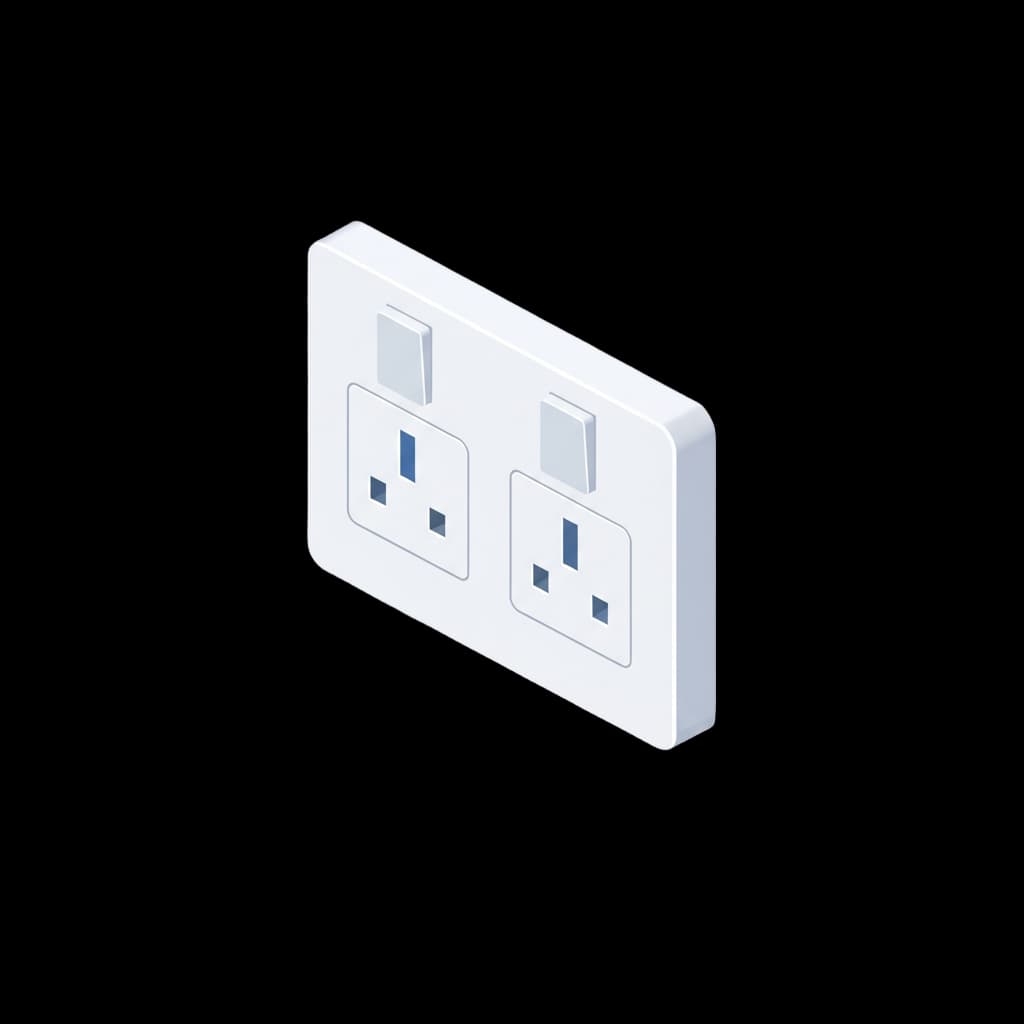
Socket & Plug Installation
Professional socket installation by qualified electricians. New single, double, and USB sockets safely added to any room. Qualified and insured.
Get a quote

Socket & Plug Installation
Qualified electrician
Same-day service
Most jobs matched within hours.
Upfront pricing
Clear quotes before work starts.
Qualified pros
NICEIC & NAPIT registered.
Pay when done
Funds held until you're happy.
How it works
Assessment
The electrician inspects the existing ring main or radial circuit to confirm it can support an additional socket. They check the consumer unit for spare capacity and identify the best feed point for the new cable run.
Cable routing
A cable route is planned from the feed point to the new socket location, following safe zones defined in BS 7671. Cables may run under floorboards, through walls, or in surface-mounted trunking depending on the property and finish required.
Back box installation
A back box is fitted into the wall — either a flush metal box chased into masonry or plasterboard, or a surface-mounted pattress. The cable is fed into the box through a grommet.
Connection and wiring
The socket is wired to the circuit using the correct conductor sizes (typically 2.5mm² for a ring main). Connections are made with the correct torque settings. If it is a spur, a fused connection unit may be required depending on the load.
Testing
The circuit is tested for polarity, earth continuity, insulation resistance, and loop impedance. Ring main continuity is verified if the socket is added to a ring circuit. An RCD trip test confirms the protective device operates within safe limits.
Certification
A Minor Electrical Installation Works Certificate (MEIWC) is issued for straightforward additions. If the work is notifiable (kitchens, bathrooms, outdoors), a full Electrical Installation Certificate and Building Control notification are provided.
What's included
What's involved
Adding or relocating a power socket involves running a new spur or radial circuit from an existing circuit or consumer unit, mounting the back box, and connecting to the ring main or radial. Whether you need extra sockets in a kitchen, USB charging points in a bedroom, or a weatherproof outdoor socket for the garden, the work must be carried out safely and to current wiring standards. A qualified electrician ensures the circuit can handle the additional load and that the installation meets BS 7671.
Adding a new socket circuit or extending an existing one is notifiable electrical work under Part P of the Building Regulations when it involves work in kitchens, bathrooms, or outdoors. Even in other rooms, electrical work must comply with BS 7671. Overloading circuits with extension leads and adapters is a leading cause of domestic electrical fires in the UK — properly installed sockets eliminate this risk.
Get a personalised quote
Typical cost: £80–£200per socket
Every job is different — pricing depends on your property, location, and specific requirements. Describe what you need and a qualified electrician will quote you directly.
How long does it take?
1-2 hours for a simple addition near an existing socket. Half a day for a new circuit run from the consumer unit or for multiple sockets in one visit. Outdoor sockets with IP-rated enclosures and buried cable typically take 3-4 hours.
Regulations & safety
Safety notice
Do not overload ring mains by adding multiple unfused spurs. Each unfused spur should supply only one single or double socket. Your electrician will assess the circuit load before adding outlets.
Outdoor sockets must be RCD-protected and rated to at least IP66 for weatherproofing. They must be installed on their own circuit or on a properly protected spur.
Never attempt to add sockets yourself by tapping into an existing socket behind the faceplate. Incorrect connections cause overheating, arcing, and fire risk.
Part P of the Building Regulations (Approved Document P)
Socket installation in kitchens, bathrooms, and outdoors is notifiable work. It must be carried out by an electrician registered with a competent person scheme, or inspected by Building Control.
BS 7671:2018+A2:2022 (IET Wiring Regulations)
All socket installations must comply with the current edition of the Wiring Regulations, covering circuit design, cable sizing, protection, and safe zones for cable routes.
IET Guidance Note 1 — Selection and Erection
Provides detailed guidance on socket outlet positioning, spacing, and installation methods, including minimum heights and distances from heat sources and water.
What to expect
Having issues with your existing installation?
Already have a socket & plug and having issues? Check our troubleshooting guides.
Frequently asked questions
Can I add a socket to a ring main myself?
What is the difference between a spur and a ring main extension?
How many sockets can a ring main support?
Do I need an outdoor socket on its own circuit?
Can USB sockets replace standard sockets?
Other installations services
Browse more services in the installations category.
EV Charger Installation
Professional EV charger installation by qualified electricians. Qualified and insured.
Light Fitting & Lighting Installation
Professional lighting installation by qualified electricians. Downlights, pendants, LED conversions, and dimmer switches fitted safely. Qualified and insured.
Electric Shower Installation
Professional electric shower installation by qualified electricians. Dedicated circuit, pull cord isolator, and supplementary bonding included. Qualified and insured.

Smoke & Carbon Monoxide Alarm Installation
Professional mains-wired interlinked smoke alarm installation by qualified electricians. Meets current Building Regulations. Heat detectors for kitchens included. Qualified and insured.
Electric Underfloor Heating Installation
Professional electric underfloor heating installation by qualified electricians. Mat and cable systems with thermostat control. Dedicated circuit. Qualified and insured.
Storage Heater Installation
Professional storage heater installation by qualified electricians. Off-peak tariff setup, dedicated circuits, and Economy 7/10 meter configuration. Qualified and insured.
Find socket & plug installation near you
Browse qualified electricians for socket & plug installation by London borough.
Need socket & plug installation?
Describe what you need to Sparky and we'll match you with a qualified electrician near you.
Book an ElectricianFind a Local Electrician
Need a qualified electrician? Browse all London electricians or find one in a borough near you.